
The case for nature-based solutions, and how to finance them
From biodiversity credits to conservation impact bonds, new financial models can reward regeneration over extraction. We just need to change the way we think about financial assets.
In 2007, Ecuador made an unconventional proposal: asking the world to pay for it not to drill for the oil reserves lying beneath the country’s Yasuni Amazonian parklands. Initially, there was some enthusiasm from environmental groups and the United Nations, which established a Green Climate Fund to keep the oil in the ground and invited public and private partners to invest in alternative energy and tree-planting projects instead. Despite raising several million dollars (far short of the $3.6 billion sought), by 2013, the Ecuadorian President was changing his tune, and the initiative floundered. By contrast, when Saudi Arabia’s government-owned oil company, Aramco, went public in 2019, it raised nearly $26 billion in no time flat, in what was then the largest IPO in history.
These opposing experiences highlight the frustrations of advocating for a business case that prioritizes the environment and biodiversity at a time of accelerating ecological destruction. A dead tree, as lumber, is still worth more to investors than a live tree. An artificially irrigated field, for intensive farming, is seen as a financial asset, but a natural wetland is not. And “climate finance” is often more interested in technological fixes and accounting tricks than in remedies that exist naturally.
Human activity impacts almost every place on the planet. A Nature study concluded that more than 77% of land and 87% of the ocean have been modified by human use, disrupting harmonious ecosystems that were developed over millennia. With only an estimated 1% of government budgets allocated to nature globally, and a $4.1 trillion funding gap looming by 2050 to combat biodiversity loss, we urgently need a new economic logic that values nature for its life-giving contributions — not just its extractive potential.
Nature’s crisis will quickly become ours
The natural world is a common good that sustains us all, and humans have always taken what they needed from the earth, though methods and attitudes toward nature have varied between cultures.
What we are seeing in nature today follows the logic of “the tragedy of the commons,” a term coined by ecologist Garrett Hardin (though the concept itself stretches back to Aristotle). It describes how individuals, each acting independently in their self-interest, collectively overuse and deplete shared natural resources. We see this in the collapse of global fishing stocks, the felling of the Amazon and the erosion of topsoil.
The latter is a serious issue in my home base of Canada, where topsoil in farming regions has been severely degraded over the past half-century, with estimates suggesting that as much as 50% has disappeared in some areas, primarily due to intensive farming practices and climate change. If you do not have topsoil, you cannot feed people, and this problem is by no means restricted to Canada. In the U.S., topsoil is eroding 10 times faster than it can be regenerated.
In many ecosystems, the loss of naturally occurring goods cannot easily be reversed or compensated for. Think coral bleaching or the transformation of former areas of jungle into dry savanna for cattle grazing. There needs to be an urgent focus globally on protecting what we have left.
However, to achieve this, we must change the way we think about financial decision-making and the economic underpinnings of sustainability.
Picture yourself as the owner of an apartment building. Each of the apartments can be rented to bring in a profit. Nature is the basement. The basement is not particularly visible or profitable in your portfolio, but all of your other investments depend on its structural integrity. If it collapses, the entire asset — whether it be real estate, crops or human lives, as the deadly floods in Texas remind us — is at risk.
When we conceive of nature as the basement to all our livelihoods and activities, we move beyond the need to simply preserve it as something to enjoy during our leisure time. Nature-based solutions are not natural parks, pristine and photogenic. Instead, they are interventions that integrate human beings alongside nature. In a city, this might mean green roofs on buildings. For a farmer, it is keeping those wetlands and not draining or planting them.
Rethinking nature as vital infrastructure
In contemporary finance, nature is often invisible. Natural assets, such as wetlands, forests and pollinator habitats, are not recognized on balance sheets. A farmer’s land drained by engineered pipes is considered more valuable than the same land supported by a naturally occurring wetland, simply because one is categorized as an asset and the other is not; one involved a financial transaction, duly recorded in financial statements, while the other did not.
Conservation finance, also known as nature-based finance, is a rapidly developing field that combines various methods to direct financial capital toward outcomes that support nature.
In the past, funding for nature-positive efforts often came through philanthropy; however, this is insufficient to halt and reverse biodiversity loss or meet climate targets. Other tools and strategies include:
- Establishing markets for environmental assets such as carbon or biodiversity credits.
- Creating financial instruments, such as green bonds and debt-for-nature swaps.
- Incorporating nature into fiscal and monetary policy.
- Providing investors with better information about how their investments affect the natural world, often through environmental, social and governance (ESG) frameworks.
Despite the urgency of the problem, only 2% of total climate finance goes toward promoting and implementing nature-based solutions. And much of this is dependent on public funds. Attracting private finance to nature-based solutions has proven challenging, as ecosystems do not align perfectly with traditional investment products.
A key component of nature-based finance is building markets that value the positive contributions of nature. For example, most current financial systems fail to recognize the value of living forests, intact wetlands or oil left in the ground. Instead, much of the focus is on quantifying pollution and selling its negative effects.
Offsetting involves funding projects that reduce emissions elsewhere, while carbon capture focuses on directly removing or preventing CO2 emissions at the source or from the atmosphere. Carbon credits are tradable certificates representing a unit of reduced or avoided emissions, often used by companies to meet climate targets.
Critics argue these approaches can delay real emission cuts, lack transparency and sometimes overstate their environmental benefits, especially when offsets or credits are based on projects with questionable impact or permanence.
An alternative approach with more potential is issuing biodiversity credits. These assign value to ecological outcomes, such as restored habitats, increased pollinator populations or preserved species.
However, these credits must be carefully designed. Biodiversity is inherently local: a tree in France cannot replace one in Canada; a thriving bee population in Chile does not compensate for a collapsing one in China. There is no universal metric to measure the worth of a wetland.
Any viable credit system must reflect ecological realities and be codeveloped with local communities who understand the land best. In the Americas, this means listening to and partnering with Indigenous communities; in Europe, it may be local farmers and land stewards who play key roles.
Above all, biodiversity credits should go beyond offsetting harm; they must foster net-positive outcomes. The goal is not to compensate for destruction but to invest in the regeneration and flourishing of life.
There are many positives to prioritizing nature-based solutions. They are cheaper and often more efficient than industrial fixes. For all the hand-wringing that goes on about how to reduce carbon in the atmosphere, we already have a tool that does just that: the tree. Using nature-based solutions to carbon also has knock-on beneficial effects, from flood prevention to preserving biodiversity.
Thinking of growth as a mushroom
In traditional business, a project or company is established and then scaled. In many cases, the same model, with only slight variations, will be applied everywhere. Think Starbucks: broadly the same in Vancouver or Paris.
But working with a portfolio of nature-based solutions requires a different mindset. Each intervention requires time, trust and knowledge of the local context.
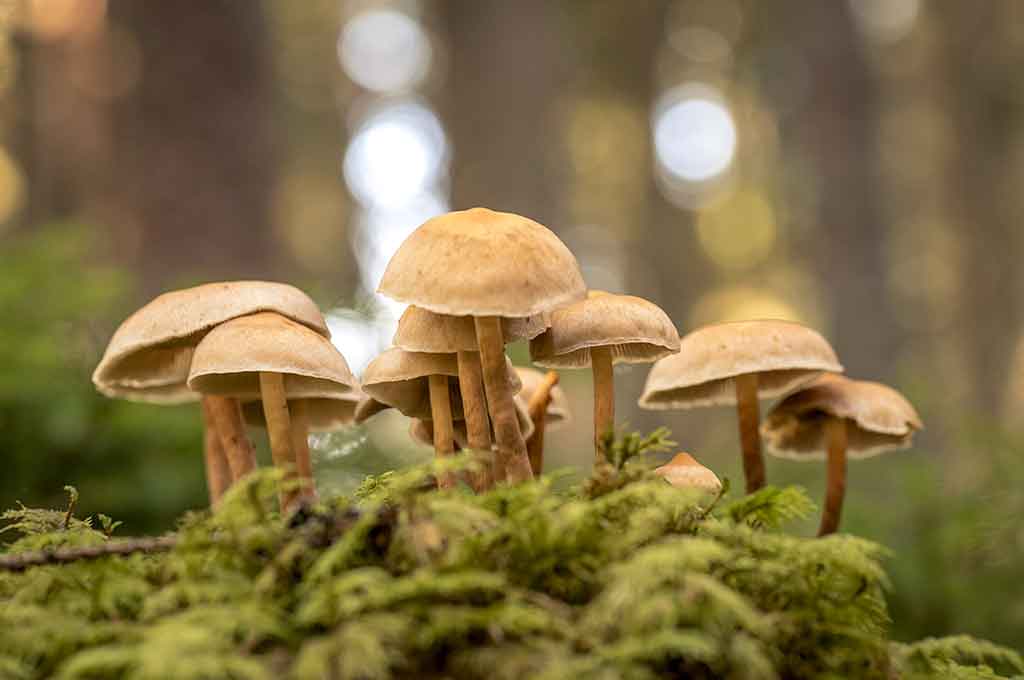
I like to think of it as growing mushrooms, which require specific conditions to thrive: humidity, darkness and a specific temperature range. But even controlling for those things, no two mushrooms are alike.
There is no single blueprint for success; instead, certain conditions can be created and encouraged to increase the likelihood of success.
Mushroom scaling means identifying the people who are ready and able to carry out the required solutions, supporting them and fostering knowledge exchange. It means recognizing the unique ecoregional realities of a place and having people on the ground.
The other thing required for mushroom-style growth is access to a patient source of capital. Nature-based solutions are generally not expensive, certainly not compared to building factories for carbon capture. It is not the cost that is prohibitive; it is changing the narrative and favoring other uses of the land: convincing people to let the trees grow and let their lands be, rather than putting real-estate developments on top of them.
Toward regenerative capital
Nature-based finance remains a relatively small player in the broader financial landscape, but it serves as a critical test of our ability to rethink the deeply extractive and individualistic relationship we have with the planet.
Time is short. The biodiversity crisis is already well underway, with over a million species at risk of extinction in the coming years. This loss threatens not only ecosystems but the foundations of human life, including the pollinators that sustain three-quarters of the world’s food crops, many of which are themselves in steep decline.
To succeed, we must embrace new metrics, new partners and new ways of seeing the world. Perhaps the most critical changes that nature-based solutions require us to make are the philosophical ones: How do we shift to an economic system that values life over death?
We must build financial systems that reward regeneration, not the ever-expanding exploitation of natural resources. This will mean reforming how assets are conceived. It may mean supporting alternative models of ownership. Above all, it means prioritizing relationships — between humans and the land, between investors and local communities, and between present and future generations — over short-term profits.
To many, this will sound like a pipe dream, perhaps even a transcontinental oil pipeline dream. But returning to the case of Ecuador — where international donors did not deliver as hoped and part of the Yasuni Amazon preserve was eventually opened to drilling — we see all may not be lost. In 2023, Ecuador held a referendum on whether to ban further oil exploitation in the park, and the people voted overwhelmingly to leave the multibillion-dollar oil reserve in the ground. It was hailed as a vote “for hope, for the future and for the protection of biodiversity and Indigenous rights.” Yet there’s no room for complacency, as governments and investors continue to drag their feet. How long they hold out depends on the extent to which we, as responsible business leaders, are prepared to adopt a more enlightened form of capitalism, one that factors nature into our thinking.
A case study: Deshkan Ziibi Conservation Impact Bond (DZCIB)
Although Indigenous peoples make up just 6% of the global population, they steward 80% of the planet’s remaining biodiversity. As such, they are often at the forefront of pressing for a different view of the world, one in which land is not owned so much as lived with in harmony.
The Sustainable Finance Lab, which I founded and help lead, frequently collaborates with Indigenous communities. One of our most pioneering innovations is the Deshkan Ziibi Conservation Impact Bond (DZCIB). This financial product combines Indigenous and Western metrics, enabling outcomes-based payments for regenerative projects that align with ecological and cultural goals.
The DZCIB is a cross-sector financial instrument and collaborative initiative led by the Carolinian Canada Coalition. It aims to restore ecosystems, advance reconciliation with Indigenous communities and build a green, ethical economy.
Like all biodiversity initiatives, this one is local, focusing on southern Ontario’s Carolinian Zone, Canada’s most biodiverse ecoregion, which is home to 50% of the federally listed species at risk, as well as many First Nations peoples with deep ties to the region.
Here’s how the model works:
- Impact investors provide upfront capital.
- Outcome payers (including the science and technology company 3M Canada, the nonprofit Pollinator Partnership and local government agencies) repay investors if conservation goals are achieved.
- Indigenous and non-Indigenous leadership, along with habitat growers, codevelop the model to ensure a local, inclusive, adaptive design.
- Interventions aim to be scalable, flexible and rooted in ethical relationships rather than relying on top-down control.
The goals of the project include accelerating the restoration of 400 hectares of land, while centering Indigenous worldviews and promoting a pay-for-success model.
Besides the Carolinian Canada Coalition, partners include the Deshkan Ziibiing Chippewas of the Thames First Nation, Verge Capital, the Thames Talbot Land Trust as well as the Ivey Business School.
Of course, many of the goals sound quite abstract when they are anything but. They involve groups of people working directly with the land. Here are some of the things they have done:
- cleared 22 acres of native meadow of invasive species;
- planted native species and climate-adapted trees;
- created a wetland and native seed orchard;
- provided a land-based education trail for Indigenous youth, with educational materials in the Anishinaabemowin and English languages;
- created ponds;
- planted trees for shade and shrubs to enhance water quality;
- added erosion-reducing plants;
- and promoted community education and engagement.
Throughout the process, the focus has been on locally adapted and climate-resilient plants, and participants have included volunteers, youth and members of the community. On one occasion, 10 volunteers planted 500 native plants — all species selected from a 1985 survey of the local vegetation.
The success of this Conservation Impact Bond is not merely its structure but the relationships it supports. Investors must visit the land, listen and learn from those who steward it.
Over time, the goal is to scale the project, both to other regions (while collaborating with local actors) and to enhance the existing project’s impact in the community.
SOURCE: This article is based on a talk by Diane-Laure Arjaliès on “Financing nature-based solutions: opportunities for inclusion and innovation,” delivered at IESE Business School in Barcelona in May 2025. It is one of a regular series of expert talks organized by IESE’s Institute for Sustainability Leadership (ISL).
This article is included in IESE Business School Insight online magazine No. 170 (Sept.-Dec. 2025).
MORE INFO: “Let’s go to the land instead: Indigenous perspectives on biodiversity and the possibilities of regenerative capital” by Diane-Laure Arjaliès and Subhabrata Bobby Banerjee. Journal of Management Studies (2024).
Empowering the human-nature bond, a StoryMap by the Deshkan Ziibi Conservation Impact Bond Leadership Team.
The Deshkan Ziibi Conservation Impact Bond Project: On Conservation Finance, Decolonization and Community-Based Participatory Research.
READ ALSO: How destroying wetlands raises borrowing costs for local governments