
Disclosing foiled terrorist attacks: A political and economic balancing act
When a terrorist attack is prevented, governments face a choice: Should they tell the public or keep the operation confidential?
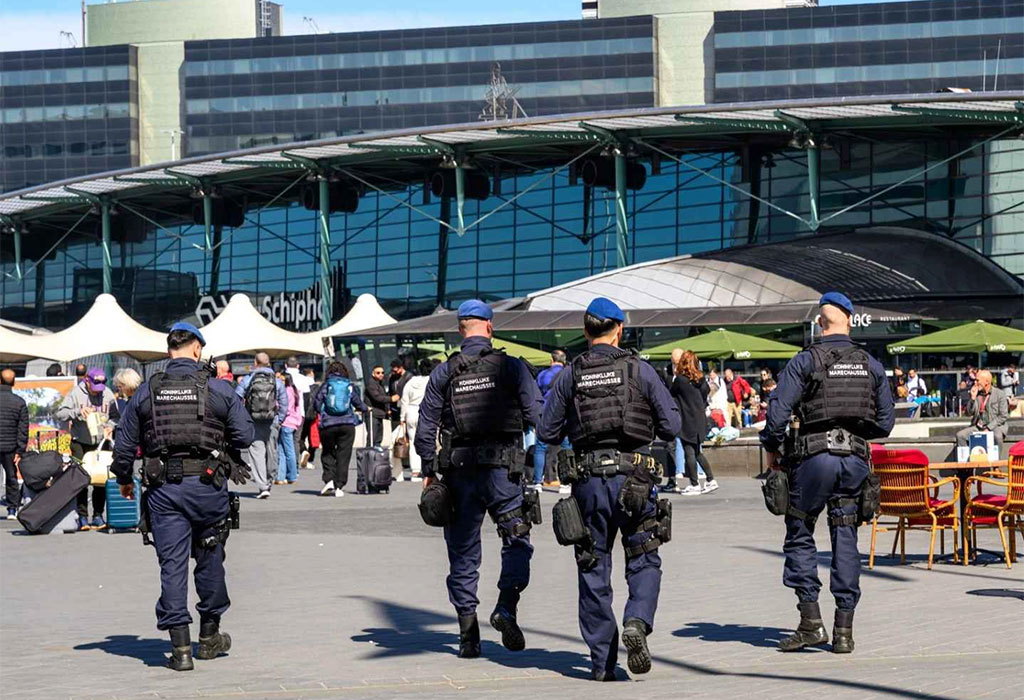
When a terrorist attack is planned but security forces get there first, should the public know?
Every country develops policies on how much to disclose to the public. But sometimes those policies can become political or have political ramifications that go beyond the immediate event.
Failed terrorism attempts are a case in point. On the one hand, transparency keeps citizens informed and can reassure them that security services are doing their job. On the other, drawing attention to foiled attacks can make citizens feel like targets. The heightened sense of risk can also have economic consequences and shape future political swings.
IESE Business School’s Pietro Bonetti and Tati Fontana from INSEAD examine the consequences of governments disclosing foiled terrorist attacks. They argue that governments are often caught between competing incentives. They must balance the economic damage that could result from making a country appear less safe against any electoral gains that might arise if voters become more concerned about security.
The researchers focused on foiled jihadist attacks across 10 European countries between 2009 and 2018. There were two reasons for this choice. First, jihadist terrorism accounted for the largest share of terrorism-related deaths and injuries during the study period, making it the most prominent public security concern. Second, the rise of the Islamic State following the invasion of Iraq, and the refugee crisis that followed, intensified public debate over immigration, with terrorist threats often becoming intertwined with rhetoric about migrants from the Middle East and North Africa.
Economic activity tied to security perceptions takes a hit
The researchers then looked at the economic impact on the hospitality industry. “We predicted that industries sensitive to ideas about safety would be vulnerable to these kinds of disclosures,” Bonetti says. “Tourism was a good measure for the economic impact.”
The researchers already knew that terrorist attacks that actually occurred tended to discourage foreign visitors — more so than domestic travelers, who are more likely to travel for business, family or friends — and so they turned their attention to the question of whether disclosing foiled attacks produced a similar effect.
It did. Countries that announced foiled terrorist attacks experienced significant declines in foreign tourism relative to domestic travel. On average, increasing the rate of disclosure to the level observed across the sample resulted in approximately 134,000 fewer overnight stays by foreign tourists and more than 151,000 fewer international passenger arrivals. This corresponds to declines of 2.4% and 4.6%, respectively.
The findings suggest that, even when no attack actually occurs, simply informing the public that one was prevented can alter how safe foreign visitors perceive a country to be.
Fear shapes the ballot box
The study also examined whether these disclosures influenced political preferences. Again, results indicated that they do.
Following the disclosure of foiled jihadist attacks, support for far-right and anti-immigration parties increased. Raising the disclosure rate to the study’s average level was associated with roughly a 3% increase in voting intentions for these parties.
According to the researchers, voters appear to interpret disclosures as evidence that terrorist threats are more severe than they previously believed. Faced with greater perceived insecurity, they become more likely to support parties that campaign on tougher immigration controls and stronger security policies. These political effects were strongest in countries where attitudes toward immigration were already more negative.
The role of the media in whipping up alarm
Media coverage amplified both the economic and political effects.
Countries receiving more extensive reporting on foiled attacks experienced larger reductions in foreign tourism, while greater domestic media attention was associated with stronger increases in support for right-wing and anti-immigration parties.
In other words, government disclosure alone was not enough. How widely those disclosures were reported determined how strongly they affected both travelers and voters.
The trade-off: Does the value of transparency outweigh the consequences?
The study does not suggest that governments routinely disclose foiled terrorist attacks for political gain. Nor does it argue that governments should conceal information from the public.
However, it does highlight a difficult trade-off. Transparency about security threats has genuine public value, but it can have unintended knock-on effects. Informing citizens about attacks that never happened can hurt sectors of the economy and shift political preferences in ways that benefit parties emphasizing immigration and security.
ALSO OF INTEREST:
Douglas Massey: how to manage migration effectively and humanely
Can migration save the welfare state? The real economics of migration
How voluntary disclosures can make supply chains more sustainable