
IPOs explained: weighing the benefits and risks of going public before taking the plunge
Listing on the stock market is one of the biggest decisions a company can make. These are the areas that deserve close attention.
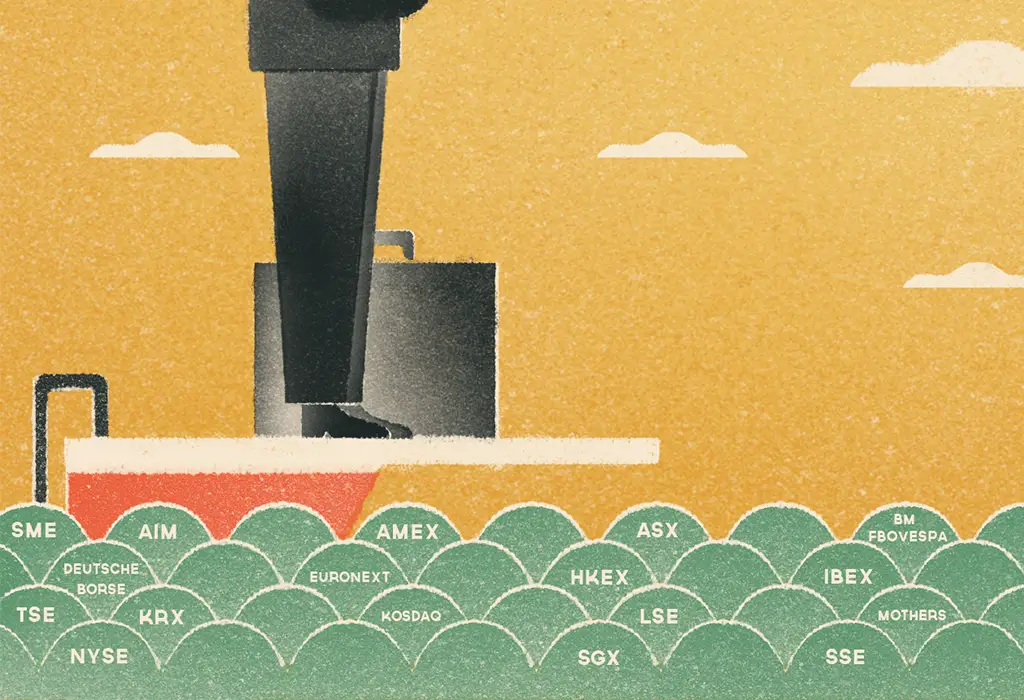
It has become so common for investors to lose money in the months following an IPO that some have quipped that instead of standing for “initial public offering,” a better interpretation of the IPO acronym would be “it’s probably overrated.”
For almost as long as they’ve been around, concerns have been voiced that IPOs are primarily being used to enrich a select few within the investment banking community along with their most prized clients, often at the expense of the very companies that the banks are being paid to take public.
Still, the IPO, despite its flaws, is an essential financing instrument that has played a pivotal role in supporting modern economic development.
This article discusses the motivations behind IPOs, how they work in practice, what companies can hope to gain from going public, and the risks they might face by doing so.
The benefits of going public
Going public is one of the biggest decisions a company can make: It is costly and time-consuming, and the publicly listed company that emerges from an IPO is profoundly different from its predecessor.
Even so, taking your company public can help you to accomplish a number of strategic goals. Here are a few ways that companies can benefit from going public.
IPOs are not without risks
Admittedly, all of these benefits have their limits, otherwise all companies would eventually go public, when, in reality, relatively few actually do. The fact is, when deciding to go public, companies face a number of risks.
Tips when going public
To navigate the IPO minefield with success, here are some key areas that deserve close attention.
1. Build a strong team of underwriters
Once a company has made the decision to go public, the first step is to file with the respective national regulatory authority, such as the Securities and Exchange Commission (SEC) in the United States.
As soon as the prospectus has been approved by the regulator, the focus turns to attracting investors. This responsibility falls to a syndicate of underwriters.
Typically, these are investment banks that use their established reputations to convince their clients of a company’s value in exchange for a commission of the total capital raised. Usually, the lead underwriter takes the lion’s share of the commissions.
A company going public must choose its underwriters carefully. The strength of the relationship that the issuing company builds with the underwriting syndicate is likely to be one of the key factors in the success of its initial offering.
Most important, the lead underwriter must have enough prestige and influence on the international stage to convince retail and institutional investors of the issuer’s potential for high performance and, with it, healthy returns.
During the period leading up to the IPO, no one involved with the company is allowed to talk publicly about anything that isn’t in the prospectus.
Meanwhile, the underwriter will be inviting potential investors to indicate the amount they are willing to buy and the price they are willing to pay. This approach, often referred to as bookmaking, enables underwriters to generate, capture and record investor demand for shares in an IPO in order to support efficient price discovery.
The issuing company must also choose how to dispose of its shares in the IPO, for which there are two generally accepted methods: the firm commitment and best effort methods.
The main difference between these two approaches is that, in the firm commitment model, the investment banker guarantees the issuing company that it will obtain the full capital, going so far as to buy and resell all the shares itself, whereas in the best effort model, the bank tries to do its best to sell all shares but does not guarantee it will do so.
A significant majority of IPOs are executed through the firm commitment method, which is perhaps unsurprising given the firmer guarantees it offers issuers.
2. Preserve the best of your corporate culture
To minimize the risk of damage to their corporate culture, companies should pay particular attention to market timing and assembling the right management team.
A firm’s top managers must have the experience and skills necessary not only to manage the IPO transaction but to operate the public company that emerges. This requires that the people at the top set the right tone.
Take the issue of the wealth generated by going public, which can open up fissures and drive wedges between managers and employees. Envy and resentment may fester, as some staff cash in their shares and flaunt their newfound wealth. Newly minted millionaires may lose their motivation to work or simply abandon ship, leaving less rewarded colleagues to pick up the slack.
3. Get a “fair” launch price
In recent years, IPOs have been heavily criticized for the widespread practice of underpricing, i.e., deliberately pricing an IPO below its market value. On the face of it, there may be legitimate grounds for doing so:
- No one can be 100% sure beforehand at which level the stock will eventually trade.
- Companies need some way to encourage investors to take up their offer.
- Regulations may require it.
- Frankly, no one wants to burn clients with wildly overvalued stock that loses value early in the game.
In an interview at IESE Business School, John Reed, former Chairman of the New York Stock Exchange, said that underpricing was understandable: “Remember, the people who are pricing are the people who are selling. They’re interested in having customers who are loyal to them, and if you give them a good deal, they’re going to be more loyal to you. The worst thing that could happen to you if you are a bank is to misprice something so badly that you will get investors who pay too much: to put something out at $25 and have it worth $15 in two weeks. That destroys confidence. Everybody you sold it to says, ‘I’ll never buy from you again!’ So, the motivation of sellers is always to underprice, because they’re trying to make sure that the next time they have something to sell, they’re able to sell it.”
As understandable as underpricing may be, Reed also acknowledged that the existing arrangement represented “a bad combination of forces.”
Jay R. Ritter, an expert on IPOs, found that underpriced share allocations are sometimes used by underwriters to “enrich buy-side clients in return for quid pro quos ... to curry favor with the executives of other prospective IPO issuers ... or even to influence politicians.”
In effect, underwriters are intentionally leaving more money on the table than necessary in order to allocate shares to their most favored clients. Then, when the stock jumps in price on its first day of trading, hundreds of millions of additional dollars can be made by investors virtually overnight.
This was commonplace during the heady dot-com boom years. Research by finance professors Alexander Ljungqvist and William J. Wilhelm, Jr., showed that average first-day returns on IPOs increased from about 17% in 1996 to 73% in 1999, and internet IPOs averaged a “stunning” 89% during 1999 and 2000. LinkedIn’s IPO in 2011 saw prices more than double on the first day of trading.
Given this state of affairs, for a company to maximize the value of its IPO proceeds, its management must play a central role in the price discovery process. “The people who have to fight back are the management,” said Reed. “They have to say, ‘Hey, it’s not fair for us to get a bad price’.”
Reed cited an example from when he sat on the board of Monsanto and was preparing for its IPO. As the company was a spin-out from Pharmacia, “We had a fair idea of what the company was worth because it wasn’t a startup. So, we were able to insist (on a fair share price).”
Unfortunately, as Reed noted, most companies “are at a disadvantage because they don’t understand what the market is going to be worth.”
This is especially difficult “if you are 28 years old and they say your company is worth $4 billion but it’s really worth $6 billion. You don’t know. You can’t even imagine what $4 billion is worth, so who cares if you underprice it?”
4. Consider how you want to issue shares
Despite all the effort to avoid overpricing so that share prices don’t take a nosedive on the first day of trading, most public offerings tend to see their prices beginning to flounder over the ensuing months. This suggests that while economic fundamentals may have little bearing on the first day’s trade, they certainly come into play during the medium to long term, being manifested in weaker share-price performance over time.
One way to both democratize IPO share allocation and afford companies and early investors the best price for their shares is through an Open IPO, similar to a so-called “Dutch auction” because it is based on price auctions. Essentially, shares are sold through a bidding process, starting high and going lower until all stocks are sold. This model is aimed at rewarding the interests of the business and its customers instead of the banks and their favored institutional investors. But because the investment bankers don’t get to set the price like in conventional IPOs, some resist this pricing method.
5. Choose the right market for your launch
Global IPOs are playing a greater role in the public launch of non-U.S. firms. This means that companies are launching operations beyond their domestic markets.
On having to obey “stupid” rules
Tighter regulation introduced in the wake of the 2007-08 financial crisis raised concerns that going public might become harder, especially for smaller firms.
Yet according to Reed, “These arguments always get exaggerated: Businessmen always think the world would be much easier if they didn’t have to obey all these ‘stupid’ rules, and the market insists that there be some discipline.”
“I think history makes it very clear that rules help. Ask a person why a car has brakes. Most people say a car has brakes so that it can stop, but that’s not true. A car has brakes so that it can go fast.”
In the same way, rules are needed in financial markets so that businesses can operate “with confidence and energy.”
Reed takes a pragmatic approach to debates over whether more or less regulation would be best for IPO activity: “I do think it’s in everybody’s interest to have confident markets, and to make sure that you know what you’re buying.”
A new bubble in the making?
One question arising for investors is whether the latest wave of IPOs may signal another bubble in the making. Are today’s IPO valuations growing completely unhinged from market fundamentals?
Today, many countries are grappling with ever-worsening debt. Despite concerted efforts by central banks to reinvigorate markets, credit remains tight. If retail investors do not have the disposable cash they used to, then theoretically this should dampen investor appetite for fueling another bubble.
And yet the mega IPO of SpaceX in 2026, along with those being considered by OpenAI and Anthropic, shows little sign of investor wariness or caution. Is this reflective of a new economic reality, a change of paradigm, or a sign of something worse in the making than the dot-com crash of the early 2000s?
MORE INFO: A version of this article was originally published as “To sink or swim when floating stock” in IESE Insight magazine (Issue 13, Q2 2012). It also quotes from an interview with John S. Reed, former Chairman of the New York Stock Exchange, conducted at IESE Business School in 2012.
READ ALSO:
When valuing companies, your market comparable may surprise you
From first principles to public pressure, the SpaceX IPO is a market test