
AI and executive coaching: Building hybrid relationships for career guidance
Artificial intelligence may restructure executive coaching, but human caring is impossible to replace.
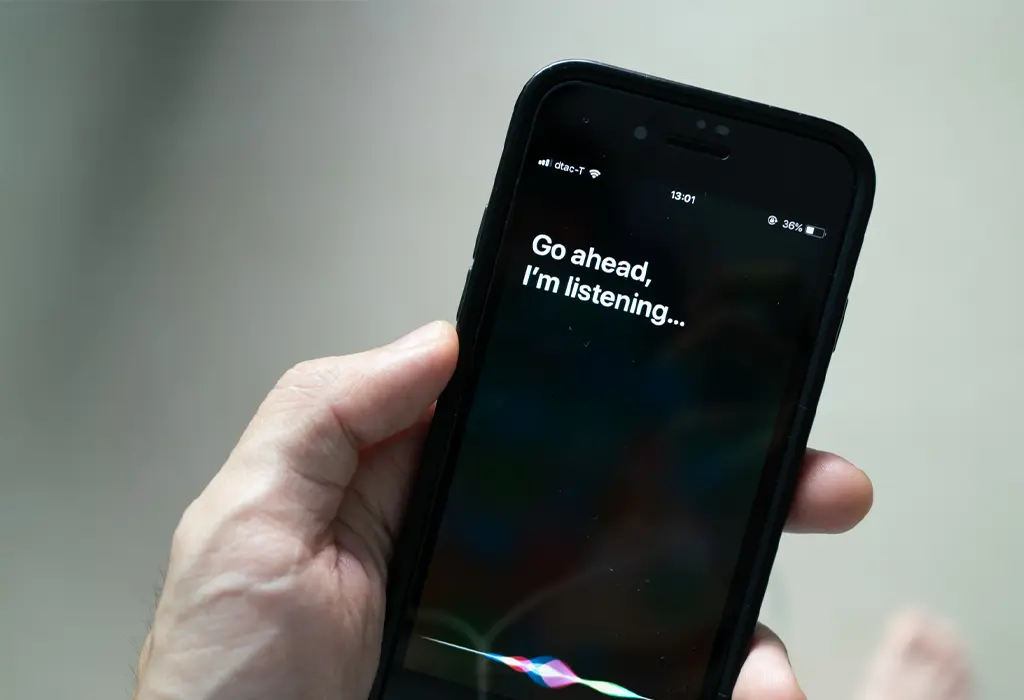
When Anthropic analyzed 1 million conversations on Claude to gauge what type of guidance users were seeking from its popular AI model, the company found that nearly 26% were searching for career advice.
That included job search and opportunity identification, career transitions and path selection, offer evaluation and salary negotiation. Professional and career advice was, in fact, the second-most-common type of guidance sought, just below health and wellness at 27%, according to the study from March-April 2026.
Artificial intelligence is seeping into career development in myriad ways, starting with AI-infused recruitment processes. In executive coaching, long rooted in human connection, it is changing both sides of the equation: how coaches practice and engage with clients as well as how clients approach the coaching process.
The future of executive coaching appears to be hybrid, with artificial intelligence augmenting the relational human core while broadening access for more professionals. “Hybrid intelligence is really the intentional integration between human expertise or natural intelligence and AI, so that we can achieve results that neither could achieve by itself,” said Columbia University’s Terrence E. Maltbia, keynote speaker at the annual symposium organized by IESE’s Executive Coaching Unit and its executive director, Estíbalitz Ortiz.
How executive coaches are using AI
To be sure, software and platforms were already making technological inroads into coaching. But AI is ramping up the trend. Coachvox, for example, helps coaches create an AI version of themselves. CoachVantage features an AI agent to assist in marketing and structuring of group coaching programs.
Maltbia approaches AI from three vantage points: the coach’s relationship with AI; the client’s relationship with AI; and the stages at which it makes sense to introduce AI into the coaching relationship.
In the day-to-day practice of coaches, AI can provide the sorts of individual efficiency gains seen in other knowledge work, such as drafting texts, summarizing material and scheduling. That can mean creating summaries of client sessions by transcribing conversations and uploading notes, or generating initial analyses of clients from multiple sources such as assessments, previous coaching experiences, LinkedIn profiles and any other relevant document.
AI can also rewire the timing and sequencing of the coaching process, says Professor Yih-Teen Lee, academic director of IESE’s coaching unit. The traditional coaching relationship has been structured around periodic one-on-one meetings, with weeks of reflection in between. AI eliminates all time constraints. In the hybrid relationship, clients may use AI for follow-up or additional exercises in between in-person sessions. “You can reimagine and reconstruct the whole flow,” Lee says.
All of this can help with what Lee calls “supported sensemaking,” or deploying AI to detect patterns in clients’ behaviors and responses, which human coaches then test and verify against their own personal evaluations to arrive at deeper insights. AI can also act as a brainstorming assistant at any stage of the coaching process.
How AI democratizes executive coaching
In a recent webinar, career development consultant Jeremy Schifeling asked participants whether they would prefer a human career coach, an AI career coach, or both. Of the nearly 600 respondents, 60% said both, compared with 38% who preferred working only with a human.
Much of the appeal of AI coaches is accessibility. Normally quite costly, executive coaching has been geared toward the upper tiers of management. Now, anyone with ChatGPT can start asking the sorts of questions they would pose to a coach, at any time of the day or night.
Beyond general search and information retrieval on jobs and careers, AI’s usefulness is proportionate to the amount of individual information the model is fed. For jobseekers looking for new opportunities, Schifeling recommends, for example, uploading all the career information you have — CVs, recommendation letters, assessments — and then asking the model to identify strengths. Those can then be matched to specific job titles requiring that skillset.
The irreplaceable human
In his first encyclical, Magnifica Humanitas, Pope Leo XIV warns of the risk of mistaking AI systems for human understanding: “They may imitate language, behavior and analytical skills, or even simulate empathy and understanding, but they do not understand what they produce, for they lack the affective, relational and spiritual perspective through which human beings grow in wisdom.”
Converting an LLM, with its conversational interface and friendly persona, into a career coach raises many of the same concerns as relying on it as a counselor for other interpersonal relationships. AI lacks empathy and judgment and excels in sycophancy — the tendency to validate whatever humans suggest, regardless of how ill-advised. Many executives seek coaching precisely because they are facing tough, nuanced dilemmas; if there were easy answers to be arrived at in seconds, they would already have them.
The best coaching relationships are founded on genuine human connection, and that is something that AI, by definition, will never master. “In a world of infinite data, human connection becomes the scarcest and most valuable resource,” Maltbia says.
Regardless of how supportive AI may sound, only humans can experience the sense of caring that translates into genuine progress, Lee says. “Feeling a coach’s profound, authentic care is unique in enabling growth.”
ALSO OF INTEREST:
How to prepare your job search for an AI world
Hack yourself: Reimagine your job and start experimenting with AI at work