
From first principles to public pressure, the SpaceX IPO is a market test
The SpaceX case reveals how to disrupt an industry — and the challenges of sustaining that advantage when going public.
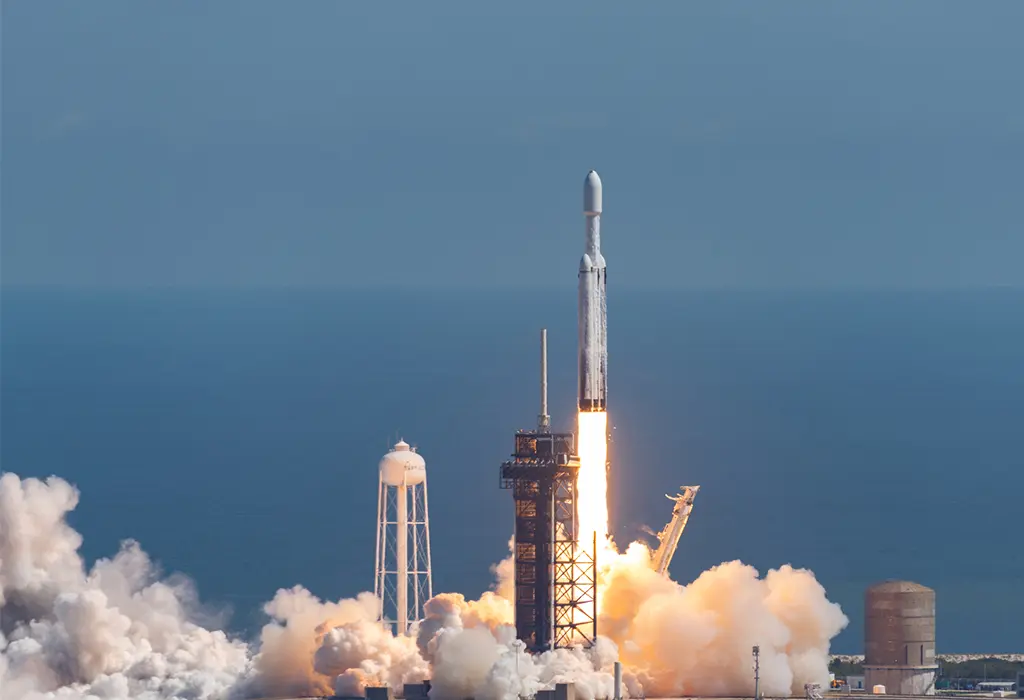
What goes up must come down. That axiom applies to stocks as well as rockets, making it all the more applicable to SpaceX. Since famously going public on June 12, 2026, Elon Musk’s rocket launch company has seen its stock price hit record highs — and then saw billions wiped off its valuation in a matter of days, which meant Musk went from being the world’s first trillionaire to going back to being “just” a billionaire before the month was out. By mid-July, the stock was trading at below its market debut price. And its stock price fell further following its first quarterly earnings report in August, which revealed the firm investing more in the unprofitable AI side of its business.
To some extent, such volatility is par for the course. As with any IPO, especially one as hyped as SpaceX’s, drawdowns are to be expected during the first year. Commonly, early investors sell up, take their profits and exit; speculators move on to the next big pick (including highly anticipated IPOs by OpenAI and Anthropic).
But SpaceX raises questions as unique as the groundbreaking company itself. Can the market support so many big tech players, which are commanding much of the available financing? Besides market integrity, SpaceX raises issues about governance, which is closely tied to the fortunes of its founder, Elon Musk, whose iconoclastic leadership is a source of both inspiration and concern.
IESE professors offer these reflections, with some practical takeaways for managers.
How first-principles thinking disrupted the status quo
Prof. Joan Jané has written two case studies on SpaceX, considering both how it disrupted the space value chain and the challenges associated with scaling, ahead of its recent IPO. The high-level question he considers is how companies ultimately compete. For a space tech company, you might think it’s all about technology — reusable rockets and ubiquitous Starlink satellites enabling the high-speed internet, streaming, video calls and GPS that we all take for granted today. But for Jané, it’s something else: systems thinking.
“What SpaceX did was break the traditional fundamentals of the aerospace industry and introduce an entirely new way of thinking and designing,” he says. “SpaceX questioned foundational assumptions — economic, operational and organizational — and rebuilt the system from first principles.”
First-principles thinking breaks problems down to their most basic, provable parts, eschewing all past assumptions and models already out there, and builds back up from new starting points.
Under the old logic, reliability was prioritized over learning, compliance over iteration, risk avoidance over risk absorption. These historical choices had structural consequences: The preference for stable, conservative value chains kept space missions in the hands of government agencies and contractors, who operated under a cost-plus logic with long development cycles spanning a decade or more.
SpaceX came along and shook things up. It recast the main constraint on space activity as not technology but cost. Missions were expensive. So, SpaceX made everything from rocket design to manufacturing subordinate to a cost reduction objective. This changed engineering processes, making rocket reusability an absolute necessity. This flipped the script, leading to rapid prototyping, failing safely, and improving performance through iterative learning cycles. Reliability, for example, no longer meant “static” but was arrived at progressively through repetition.
This set off a virtuous circle, as Jané explains: “The more data you generate, the more you learn; the more you learn, the faster you can improve; the faster you can improve, the more volume you get, achieving economies of scale; and if you have economies of scale, you can generate efficiencies, more data, more learning, and the cycle repeats itself. This is how you disrupt a traditional industry, which is why there is so much more to it than just technology.”
This change of industry logic is no less radical than Ford’s, believes IESE Prof. Philip Moscoso. Not only has SpaceX surpassed national space agencies like NASA, but it has paved the way for other companies, including Jeff Bezos’ Blue Origin and Spain’s PLD Space, to leverage new business opportunities in the burgeoning space sector.
Speaking at IESE Aerospace Day, NASA’s Philip Baldwin acknowledged how much the industry had changed, saying he was happy to leverage commercial industry, conceding satellites and outer space data centers to them. He also saw reusable rockets as a key innovation: “Before, we were just launching and launching, and not caring so much about reusability. Now, there has been a shift.”
IPO raises concerns over corporate governance and market integrity
Which brings us to the 2026 headline-grabbing IPO. Until recently, SpaceX operated as a privately held company, insulated from the short-term pressures of public markets. As a requirement for going public, companies are obligated to “pop the hood,” so to speak, giving investors, regulators and competitors a peek at the inner workings of the firm to see what makes the engine tick. On doing so, market analysts reportedly felt there was “a major disconnect between market expectations and underlying fundamentals,” straying into “extremely speculative” territory.
The IPO prospectus revealed that, of SpaceX’s three main business areas — rockets, satellites and xAI — only the satellite business was lucrative enough to justify its eyebrow-raising valuation. Rockets and xAI were cash burners, and “xAI is not even at the forefront of other advanced AI models,” noted IESE Prof. Xavier Vives, writing in La Vanguardia.
While SpaceX has managed to question the efficacy of national governments in space operations, by going public, it may be those selfsame government stakeholders who now question SpaceX’s efficacy. The more deeply involved it gets with NASA — as it did with the Artemis II crewed moon mission in April 2026 and as it plans to do again with Artemis III in 2027 — the more public and private interests may start to collide.
“A development trajectory marked by explosive test failures may be defensible in a private context,” says Jané, “but in public markets, such events can trigger reputational damage, stock volatility and political pressure. The very behaviors that enabled SpaceX to move fast will come under pressure with public ownership.”

Elon Musk is famous for shaking things up. But is volatility what is needed now? Photo by Daniel Oberhaus (2018) under Creative Commons License.
Vives raised this additional political concern: “Given the enormous influence of companies like SpaceX, which are crucial for communications and defense (as we have seen in Ukraine), it is all the more surprising that the State does not retain control over key infrastructure like the satellite communications network. Defense is a public good that must remain under democratic control … not an entirely private objective, guided by economic interests.”
Another governance question mark hovers over the Nasdaq stock exchange’s decision to relax some of its requirements to allow SpaceX and others like it to list more quickly and easily. “This means that investors in index-tracking funds are automatically and immediately investing in these firms, where control is concentrated in the hands of founders and insiders with shares that carry more voting rights than the rest (10 times more in the case of SpaceX),” warned Vives.
This comes against a backdrop of other AI-focused listed firms — namely Alphabet, Amazon, Meta, Microsoft and Oracle — each carrying growing amounts of debt. Indeed, according to research by IESE Prof. Christian Eufinger, over the past year alone there has been an unprecedented amount of debt issuance to these firms to fund data centers and power infrastructure, exceeding these firms’ internal cash flows, which increasingly exposes certain sectors of the economy to AI-related investment risks.
The more that companies take on debt to try to win these races (whether of space and/or AI), the risk to macroeconomic stability goes up. “There may not be enough room in the market for everyone,” observes Vives, “and if some of these investments fail to deliver the expected returns, it’s not just that some investors will lose money, but it also holds implications for the broader economy. If these ventures are primarily being financed with debt, then the fallout could be consequential.”
Is the leadership right for the new competitive landscape?
There is yet another open question regarding whether SpaceX can survive the new pressures of going public, and it is related to its leadership. As with his other big, listed company, Tesla, Elon Musk is the controlling shareholder, only with SpaceX he owns approximately 46% of the stock, nearly three times that of Tesla; with his 10 votes per share, that gives him well over 80% of the total voting power.
This unheard-of arrangement defies all the normal rules of corporate governance. Also atypical are not having a majority of independent directors on the board, executive pay not determined by an independent committee, and requiring shareholder disputes to be resolved through arbitration rather than federal courts. This gives Musk near-total unrestrained control for life.
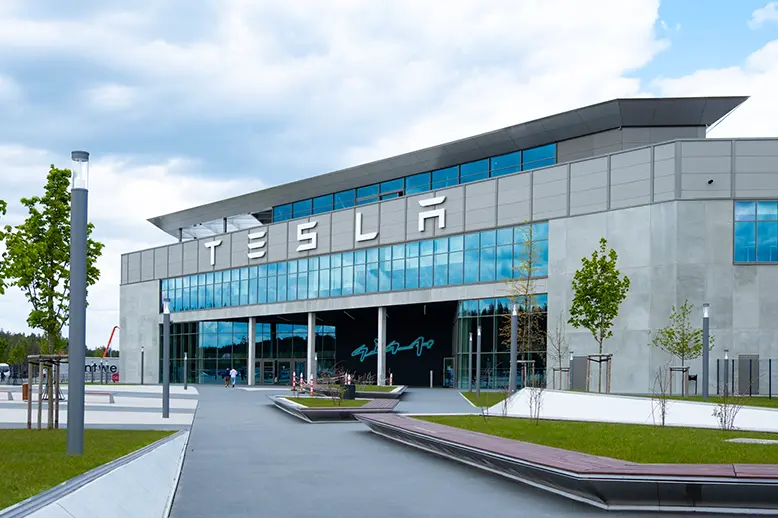
Tesla is another example of a Musk-led company that redefined an industry but, as another IESE case study explores, has been undergoing challenges lately owing to new competitive threats as well as Musk’s controversial leadership style and propensity to attract drama.
The conditions and leadership that bring a company to an IPO may not be the right ones to maintain the same fabled status once public.
Moreover, the trail that SpaceX blazed is now an established path for new market players. Competitors are catching up on scale and cadence, able to reliably launch rockets and satellites into orbit on demand and with fast turnaround times. Other market entrants are focusing on niche segments, differentiated missions and closer alignment with government priorities. The geopolitical dimension of the space business isn’t going away anytime soon. A company leader who poses a political liability does not bode well for the future.
That being said, are there enough other companies able to really catch up and compete with SpaceX? Going back to Jané’s earlier point, it’s easier to copy technologies and replicate processes than it is to adopt a profound change of mindset like systems thinking. “And that’s really what gives SpaceX its competitive advantage for the foreseeable future,” believes Jané.
Beyond the specific issue of whether SpaceX can keep delivering under the leadership of Elon Musk and the capital market demands imposed by the IPO, the broader issue is whether competitors are successfully able to replicate SpaceX’s outputs without replicating its systems thinking. And for Jané, that remains the crucial question.
Adopting a new mindset
What are the assumptions underlying your industry? Returning to first principles could transform the way you currently do things, giving you a new competitive edge.
Cost. Could a new KPI around cost reconfigure your system in some way?
Organizational design. Orienting the whole culture around the new mindset changes how work is organized and subordinates operational processes to the new objective.
Leadership. A first-principles, learning-driven organization requires the right kind of leadership — managers with vision, a long-term view and a tolerance for risk, able to orient all business choices, incentives and systems around the new set of objectives, so that everyone stays the course.
Reusability/modularity. Do you design for disposability? How might your operational architectures, industrial processes, engineering choices and cost structures shift if you stopped designing for short-term, one-off or limited-time use? What if you began to think in terms of frequent or repeated use, repurposed parts and long service lifetimes?
Indeed, as legislation like the EU Circular Economy Act comes into effect, many sectors and their suppliers will be forced to reconceptualize their business models. Will you be ahead of this shift or get left behind?

Go public? An IPO can raise the equity and liquidity you need to drive future growth and boost your market profile. However, the process is also costly, time-consuming, and makes internal information visible to competitors, which could be strategically bad for your company. The publicly listed company that emerges may be profoundly different from what it was before. And if the management focus shifts to short-term stock prices rather than long-term growth, the company culture may change for the worse.
MORE INFO:
The business case studies “Starship SpaceX: Scaling a first-principles system under pressure” and “Starship SpaceX: Disruption in the space value chain,” by Joan Jané, are both available from IESE Publishing.
IESE professors Philip Moscoso and Alejandro Serrano have written a business case study on “PLD Space” in collaboration with PLD’s Ezequiel Sanchez. The case won an award from the European Foundation for Management Development (EFMD Global).
The business case study “Tesla in the 2020s: Moment of truth for the master plan,” by Pascual Berrone, Adrian Caldart, Joan Enric Ricart and Isaac Sastre Boquet, is also available from IESE Publishing.
This article is included in IESE Business School Insight online magazine No. 173 (Sept.-Dec. 2026).
READ ALSO:
IPOs explained: weighing the benefits and risks of going public before taking the plunge
Space, the final frontier of global cooperation
An AI debt wave meets uneven balance-sheet risk
When valuing companies, your market comparable may surprise you
15% off with the code INSIGHT15