IESE Insight
From the Strait of Hormuz to geoeconomic strategies, Europe has more power than it believes

Beyond the Strait of Hormuz, the world is splitting into separate blocs. Europe needs to make the most of the strategic assets it possesses.
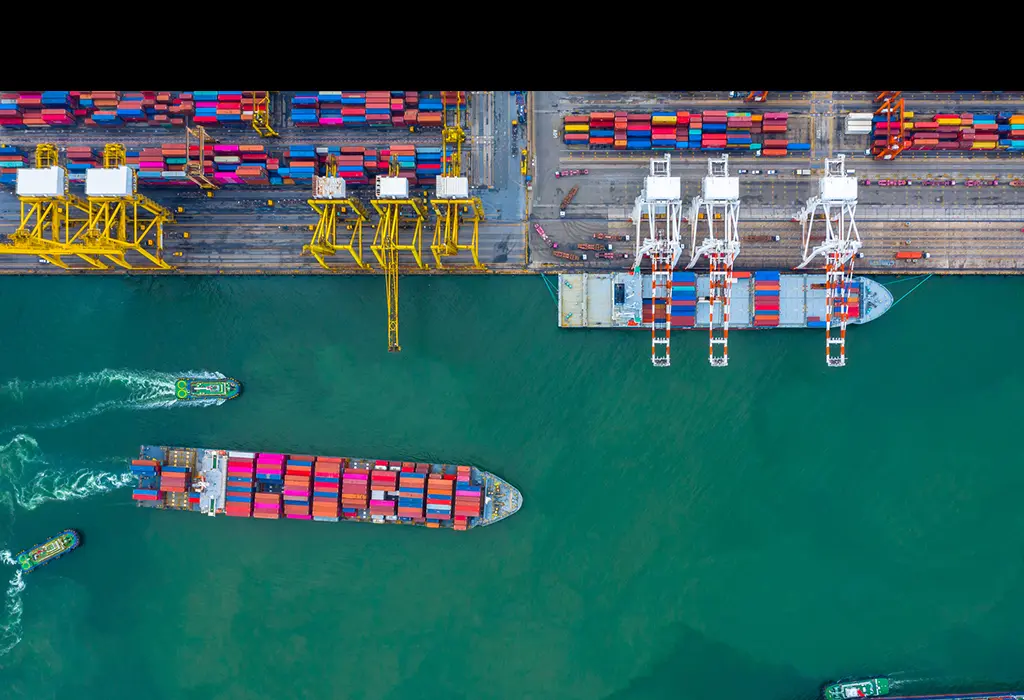
The closure of the Strait of Hormuz has dominated headlines, due to its impact on oil prices, but it also reveals something bigger: The world has been broken into blocs, where geography, geopolitics and geoeconomics have replaced multilateralism — what IESE describes as a PLUTO world.
In a special session, IESE Prof. Nuria Mas analyzed this new reality, homing in on the war in Iran and Trump’s tariffs, and explaining why Europe is better placed than many realize to defend its position in a world where size matters.
An economic actor the size of the United States
Europe is bigger than it realizes. Including both the EU and the rest of the continent — the United Kingdom and Switzerland — it represents over 24% of global GDP, almost on a par with the 25.7% represented by the United States and well above China’s 16.7%. Even the eurozone alone (18.2%) has a larger share than China’s. “Our share of global GDP is considerable, more than we ourselves appreciate,” says Mas. That share is the base from which Europe can negotiate, act and, should it choose to, compete.
Moreover, Europe has a number of strategic assets that are difficult to replicate. The European Commission has identified 41 critical bottlenecks for Europe — products for which the zone acts as a key supplier. In industrial robotics, Europe, and more specifically Germany, remains a global leader, and in pharmaceuticals, it is one of the most competitive players on the planet.
The challenge is to innovate. For decades, Europe has dominated high-precision industrial sectors such as automotive, machinery and chemicals, but it hasn’t leapt to the next wave: software, artificial intelligence (AI) and high technologies. The four companies that invest the most in R&D worldwide are (in order) Alphabet, Meta, Microsoft and Apple — all of them American and all Big Tech. China’s Huawei is in fifth place and also tech. The first European company on the list is Volkswagen, in sixth place. In 2003, the sectors that led in R&D investment in Europe and the United States were practically the same, but these days, the situation is rather different. In the United States, investments are tilted heavily toward information and communication technologies (ICT), which is not the case in Europe.
This is what economists call the “middle technology trap” — sticking to what you know how to do well, but failing to make the leap to the next level. The Draghi report on EU competitiveness laid out a road map to avoid getting stuck in this situation: 383 specific measures, 11% of which have been implemented since the recommendations were first published in 2024.
Mas sums up the situation by saying, “The good news is that we know what we have to do; the bad news is that it’s proving difficult.”
Europe’s inability to attract innovation
The problem, as discussed, is neither size nor assets, and nor is it capital. Every year, billions of euros leave Europe to be invested elsewhere, mainly the United States. “We don’t have a money problem,” says Mas, “but the money doesn’t stay here to invest in our own R&D.”
For her, the solution isn’t to set all the European machinery in motion at once. “There are decisions that require a consensus of all 27 member states, such as trade, the single market and monetary policy, but there are other decisions that don’t.”
For such steps, Mas supports what Draghi calls a “coalition of the willing,” a group of countries that decides to move forward together without waiting for the others. For example, Spain, Germany, France and the United Kingdom could coordinate a tax-advantaged pension fund that would invest only in companies from those countries, offering an attractive destination for capital investment without requiring European-level reform.
Tariffs and war, two short-term shocks
Against this backdrop, there are two immediate challenges that every executive must address:
- U.S. tariffs. “The situation in Iran has made us forget the gravity of Trump’s tariffs,” Mas says. On February 20, 2026, the U.S. Supreme Court struck down the emergency law (IEEPA) under which Trump had imposed broad-based tariffs. Instead, the president has invoked a 1974 agreement that allows him to impose temporary tariffs without approval from Congress for 150 days at a maximum rate of 15%; he opted for 10%, reducing the average tariff on European imports from 8.3% to 6.6%. The measure buys time to design permanent tariffs, but it also opens a 150-day window with clear rules: Companies know what costs they will face and can plan accordingly. For Spain, whose U.S. exports amount to barely 6% of the total, the direct impact is limited.
- The war in Iran and the Strait of Hormuz. “Iran has responded more forcefully than anticipated,” Mas says. “The economic damage this response has caused is also stronger than expected, particularly because it has all but closed the Strait of Hormuz. The impact on Europe will depend on how long it lasts. A resolution within two weeks could result in a 0.3-point slowdown in European GDP (from 1.1% to 0.8%), with inflation hovering around 2%. A two-month escalation with oil at $120-$130 per barrel would leave growth at 0.4% and inflation at 2.2%-2.3%. “We economists don’t have a crystal ball,” Mas says. “We can consider different scenarios, but business leaders must decide which scenario they consider to be most likely.”
4 key questions for business leaders
Mas proposes a series of reflections for business leaders who need to manage through this crisis. In a world in which geoeconomics rewrites the rules, these are the questions you should be asking yourself today:
- Am I taking strategic regions for granted? What happened in the Strait of Hormuz is a reminder of how a region that seemed guaranteed can collapse from one day to the next, with strong knock-on effects on supply chains. Identify your dependencies before the shock comes.
- Do I know my suppliers’ weak spots? The COVID-19 pandemic and the war in Ukraine have already demonstrated that it isn’t enough to know your own supply chain. If your suppliers run into problems, they will become your problems, too. Map the whole supply chain, not just your first immediate supplier.
- What could cause my business model to collapse? Tariffs and market fragmentation will surely intensify, Mas believes. Test your strategies against scenarios in which current assumptions no longer hold true, before these come to pass.
- Am I using regulation to my competitive advantage? European standards on plastics, packaging and sustainability go beyond mere regulatory compliance. For Mas, regulation is also a geoeconomic tool, and sustainability is a geopolitical lever. Use it to define markets and compete, not just to comply.
We have entered an era in which monetary and fiscal policy are insufficient for understanding economic reality. Geoeconomics is now essential.
In this new landscape, Europe has the scale (24% of global GDP), the assets (41 critical bottlenecks) and the road map (the recommendations of the Draghi report). All that remains is to act.
SOURCE: “Geoeconomics in times of fragmentation: keys for 2026,” an online session organized by the IESE Alumni Association (in Spanish).
ALSO OF INTEREST:
PLUTO: A framework for managing amid radical uncertainty
Europe’s response to the new U.S. administration
Nuria Mas presents two scenarios if the Strait of Hormuz closure continues