Climate Action: the Growth Story of the 21st Century
Climate Action: the Growth Story of the 21st Century
IESE Madrid · 2026
Climate change is often framed as a constraint on growth. In this event, we explore a different—and more compelling—narrative: climate action as the defining economic opportunity of our time.
Drawing on his new book, The Growth Story of the 21st Century: The Economics and Opportunity of Climate Action, Lord Nicholas Stern argues that the global economy has reached a structural inflection point. Clean technologies are now increasingly competitive, investment is accelerating, and the transition to a low-carbon economy is not only necessary, but economically rational and growth-enhancing. Far from being a burden, decarbonization can drive innovation, productivity, job creation, and long-term prosperity. Complementing this economic perspective, Professor Laia Alegret will bring the scientific lens. Her research in paleoclimatology provides powerful evidence from Earth’s geological record of how past increases in atmospheric CO₂ have led to profound and often irreversible transformations in climate and ecosystems. Together, their insights bridge science and economics—urgency and opportunity. By bringing Lord Stern’s economic framework into dialogue with Laia Alegret’s scientific evidence, this event aims to re-anchor the climate conversation in facts, offering business leaders a clear and strategic understanding of climate action as the growth story of the 21st century.
The book offers a powerful and timely reframing of the climate transition: not as a constraint on prosperity, but as the defining economic transformation of our time. Public debate around climate change is increasingly shaped by polarization, misinformation, and simplified narratives that question either the existence of climate change or the economic rationale for action. Within parts of the business community in particular, climate action is still sometimes perceived as ideological, regulatory-driven, or at odds with competitiveness and growth.
The discussion will build around the central thesis of the book — that the global economy has reached a structural inflection point. The fossil-based growth model is characterized by declining returns and mounting systemic risks, while clean technologies benefit from falling costs, economies of scale, and accelerating capital allocation. The crossover between these systems has already occurred, making decarbonization not only necessary, but economically rational and increasingly profitable.
 |
 |
 |
April 10
16:30-17:00 Registration and Welcome
17:00 – 17:10 Welcome remarks
- Prof. Fabrizio Ferraro, Professor of Strategic Management, IESE Business School and Director of the Institute for Sustainability
- Lola Solana, Chair of the Instituto Español de Analistas (IEA)
17:10 – 17:25 Opening remarks
- Jose Manuel Entrecanales Domecq, President and CEO of ACCIONA
17:25 – 17:40 Scientific Evidence of Climate Change: Learning from the Past
- Laia Alegret, Professor of Paleontology at the University of Zaragoza
17:40 – 18:10 The New Growth Story: Decarbonization as the new growth paradigm Keynote
- Presented by Lord Nicholas Stern
Presentation of The Growth Story of the 21st Century, outlining the “inevitable” economic logic underpinning the climate transition.
18:10 Open Dialogue with the Audience | Q&A session
A moderated discussion with Nicholas Stern and academic representatives, addressing questions from the audience and engaging directly with doubts, concerns and prevailing myths around climate change and economic performance.
19:30 Cocktail reception
An informal reception for speakers and participants to continue the conversation, exchange perspectives, and foster connections in a relaxed setting.
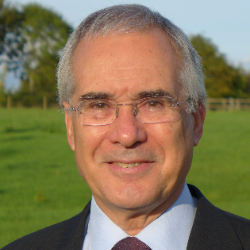
Lord Nicholas Stern
Lord Stern of Brentford, CH, Kt, FBA, FRS
Nicholas Stern is IG Patel Professor of Economics and Government, Chair of the Grantham Research Institute on Climate Change and the Environment, Chair of the Global School of Sustainability at the London School of Economics. He has held posts at other UK and overseas universities, and as Chief Economist at both the EBRD and the World Bank. He was Head, UK Government Economic Service 2003-2007, and produced the Stern Review on the economics of climate change. He was President of the Royal Economic Society (2018-2019). He was President of the British Academy (July 2013-2017) and was elected Fellow of the Royal Society (June 2014). He was knighted for services to economics (2004), made a life peer (2007), and appointed Companion of Honour for services to economics, international relations and tackling climate change in 2017. He has published more than 25 books and 200 articles. His latest book, “The Growth Story of the 21st Century: the economics and opportunity of climate action” was published by LSE Press in autumn 2025.
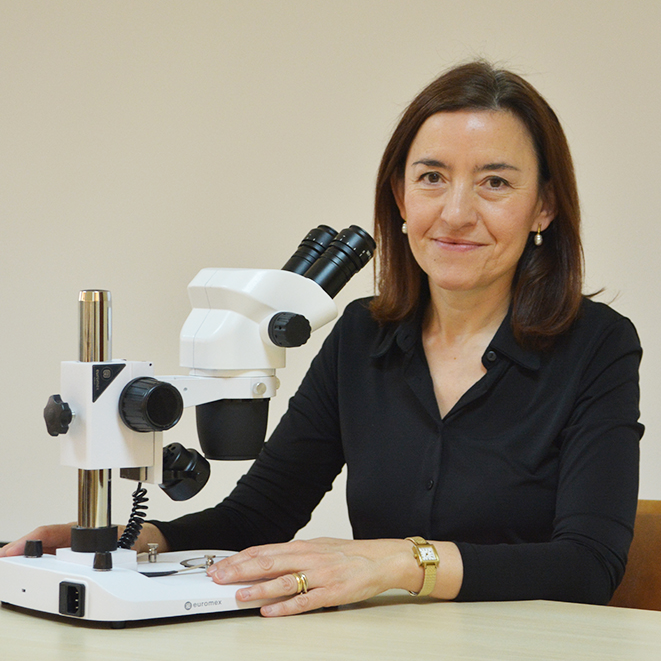
Laia Alegret Badiola
Geologist and Professor of Paleontology at the University of Zaragoza
Full Professor in Paleontology at the University of Zaragoza (UNIZAR) and Fellow of the Spanish Royal Academy of Sciences, Alegret became its 9th female fellow since 1847.
Author of ground-breaking research on past global environmental change over timescales of millions of years, to gain a well-founded understanding of the workings of Earth system, as indispensable contextualization of the current and future global change. Founder of the Benthic Foraminifera and Global Change Lab at UNIZAR.
BSc (1998) and PhD (2002, and Doctorate extraordinary award) in Geology (UNIZAR). Postdoctoral fellow at University College London (2003-2005), Ramón y Cajal Fellow at UNIZAR, Senior Lecturer since 2010 and Full Professor since 2022. With 24 research stays in institutions from four continents (Yale, Wesleyan and Colorado Boulder Universities, MIT, Smithsonian Institution, New Zealand GNS, etc.), Alegret has led multiple research projects in competitive calls. Recipient of the prestigious Leonardo grant (BBVA Foundation), and the only Spanish scientist in the ocean drilling (IODP) Expedition 371 to Zealandia, the hidden continent. She is the author of > 200 research articles in many scientific journals at the top of their fields, and >220 communications in conferences.
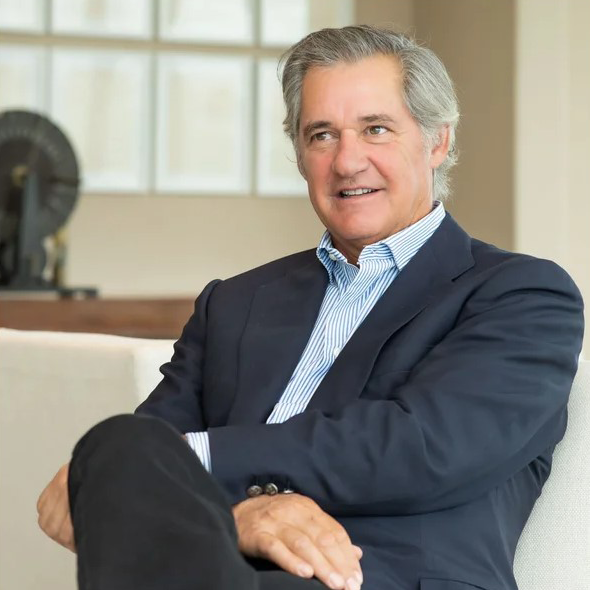
José Manuel Entrecanales Domecq
Chairman and CEO of ACCIONA
José Manuel Entrecanales Domecq is the Chairman and CEO of ACCIONA, a global leader specializing in sustainable solutions to address climate change, including renewable energy, water, transportation, waste management, and eco-efficient buildings. ACCIONA operates in more than 60 countries with over 68,000 employees and is listed on the Spanish and German Stock Exchanges.
Since assuming the role of Chairman in 2004, Entrecanales has led a strategic shift towards sustainability and renewable energy. Under his leadership, the company has developed major projects in wind energy, solar energy, and sustainable infrastructure across Europe, Latin America, Asia, and Australia. José Manuel is a recognized leader in innovation and the promotion of business solutions aimed at combating climate change and driving the transition to a cleaner, more efficient economy.
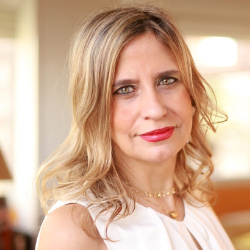
Lola Solana
President, Spanish Institute of Analysts | Head of European Small Caps, Santander Asset Management
Lola Solana Campins is President of the Spanish Institute of Analysts and the Foundation for Financial Studies, and Head of European Small Caps at Santander Asset Management, where she has built a distinguished 35-year career in investment management. A recognised expert in European equity markets, she has been awarded the Citywire prize for Best Spanish Equity Fund Manager three years running (2017–2019), along with multiple BME and Lipper awards for fund excellence. Beyond her investment career, Lola is an active educator, lecturing in stock market analysis at IEB, AfI, and Escuela Finanzas Business School, and sits on the CNMV Advisory Committee. She is equally committed to social impact, having mentored young women facing adversity through programmes at Banco Santander and Fundación Everis.