Stories
Four unicorns and 100,000 startup jobs: IESE’s entrepreneurial impact over 25 years
The school’s Entrepreneurship and Innovation Center has developed an ecosystem connecting thought leadership, education, mentoring and global networks
September 8, 2026
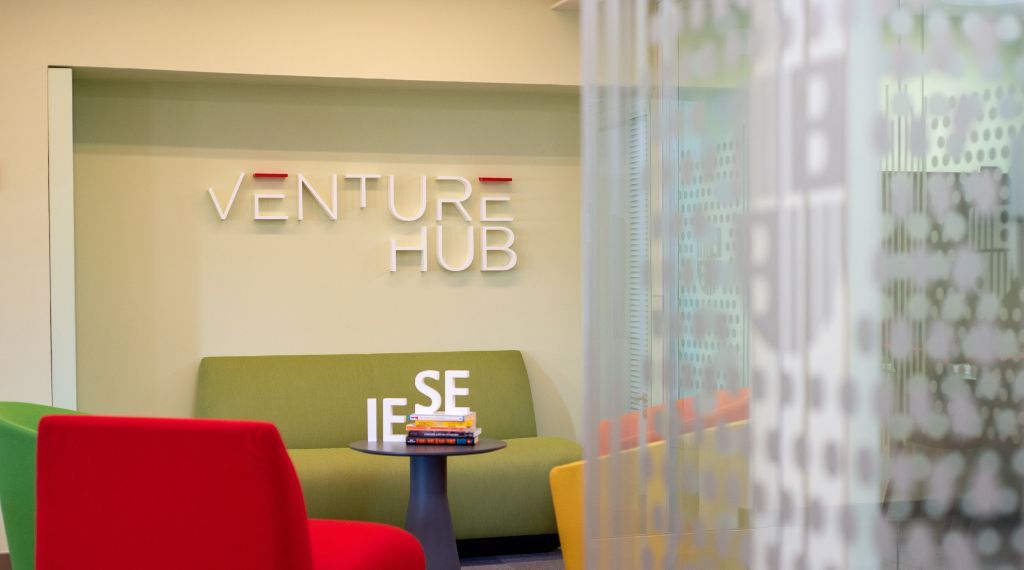
IESE’s Entrepreneurship and Innovation Center latest Impact Report shows that, over the past 25 years, startups founded by IESE alumni have created more than 100,000 jobs, raised $24.75 billion and produced four unicorns: Lazada, Letgo, Perk and Multiverse Computing.
- Four unicorn companies.
- More than 100,000 jobs.
- $24.75 billion in capital raised.
- Nearly 3,800 founders.
These figures, which cover the past 25 years, provide one measure of the entrepreneurial activity of IESE alumni. They range from thousands of founders building and scaling businesses to four alumni-founded companies that have reached unicorn status.
At IESE, entrepreneurship is more than starting a company. It is a mindset that helps leaders recognize opportunities, build teams and create value for business and society.
Four paths to unicorn status
The four unicorns span different sectors, markets and generations of IESE alumni.
Lazada was launched in Southeast Asia in 2012, with IESE MBA’11 alumnus Gerald Glauerdt among its co-founders. The e-commerce company expanded across the region and became one of Southeast Asia’s major online shopping platforms.
Letgo, the second-hand marketplace co-founded by IESE MBA’06 alumnus Enrique Linares in 2015, reached a $1 billion valuation just 502 days after launch. The company grew internationally before being acquired by U.S. marketplace OfferUp in 2020.
Perk (formerly TravelPerk), cofounded by IESE MBA’11 alumnus Avi Meir, focuses on business travel management. The Barcelona-based company reached unicorn status in 2022.
The most recent addition is Multiverse Computing, co-founded by IESE MBA’90 alumnus Enrique Lizaso. Based in San Sebastián, the company develops quantum computing and AI technologies and reached unicorn status in 2026.
Together, the four illustrate the variety of companies built by IESE alumni across regions and industries, from e-commerce and online marketplaces to business travel, quantum computing and AI.
28 years supporting entrepreneurship
The Entrepreneurship and Innovation Center was established in 1998, but IESE’s commitment to entrepreneurship goes back further. The School introduced entrepreneurship into its MBA curriculum in the 1974-1975 academic year, becoming the first European business school to teach the subject in an MBA.
Over the Center’s 28 years, its activities have expanded to support entrepreneurs, innovators and investors at different stages. Today, its work includes supporting entrepreneurs developing and scaling new ventures, scientists and engineers bringing scientific discoveries and technologies from the lab to the market, executives advancing corporate innovation, business angels building their investment expertise, and entrepreneurs acquiring and growing companies through search funds.
“Entrepreneurship is the ability to craft, develop and grow new opportunities, both through start-up projects and within existing firms,” says Professor Thomas Klueter, Academic Director of the Entrepreneurship and Innovation Center. “The value of an entrepreneurial mindset is transmitted through all our activities.”
Beyond the unicorns
The four unicorns are one measure of entrepreneurial growth, but they form part of a much larger community. Nearly 3,800 IESE alumni founders are represented in the data, with companies at different stages of development and operating in markets around the world.
Jobs created and capital raised provide another measure. Over the 25-year period covered by the data, startups founded by IESE alumni have created more than 100,000 jobs and raised $24.75 billion.
The figures also reflect a broader view of entrepreneurship at IESE. Beyond starting a company, an entrepreneurial mindset can be applied to developing new ventures, commercializing research, investing in businesses, acquiring and growing companies, or pursuing new opportunities within established organizations.
As Associate Dean for Research and the PhD Program Gaizka Ormazabal notes, “Entrepreneurs with a true sense of purpose provide a great service to society.”
The four unicorns are part of that wider picture: 28 years of activity by the Entrepreneurship and Innovation Center and a much longer history of entrepreneurship at IESE.