Family Businesses: Building Legacies That Last: An exchange from families to families
IESE Barcelona · November 11-13, 2026
Introduction
The FBN–IESE Africa Workshop returns for its second edition. The first gathering, held in Barcelona in April 2025, brought together leading African and global families for the first time to share experiences, discuss common challenges, and explore what a lasting network of African family businesses could look like. This second edition picks up from where that conversation left off.
Both returning families and new participants are welcome at this gathering. Those who attended in 2025 bring continuity and the relationships formed over the past year. New families bring additional perspectives and extend the reach of the network. The mix of both is intentional: trust between families develops over time and across multiple interactions.
Our Overarching Objective
Our aim for this second edition is to offer concrete value to everyone in the room — through honest peer exchange, updated research, and the formal establishment of FBN chapters on the continent, with the goal of developing strong local communities in Africa, building on four decades of FBN’s experience in fostering local networks.
The participants will leave with a clearer sense of what this community can offer them, and a genuine interest in remaining involved beyond the event.
The programme this year covers three connected themes: how families build partnerships across borders, how they develop the next generation of leadership, and how they contribute to the communities around them.
We also continue the research work begun in 2025, presenting expanded findings from new interviews and surveys conducted with African family businesses across the continent, and building on the report “From Foundations to Future” introduced at the first workshop.
A Significant Step Forward
This workshop coincides with an important development in the growth of FBN on the continent. Chapters in Kenya, Nigeria, Ivory Coast, Ethiopia, and South Africa are at various stages of formation. The workshop will include dedicated time to take stock of where things stand, celebrate genuine progress, and work together on what comes next. The goal of building strong local FBN communities in Africa — with the same depth of engagement that has made FBN’s existing chapters so valuable to their members — remains at the heart of this gathering.
Format
The three-day format follows the same structure as the first edition: afternoon visits to family-owned businesses on the day of arrival; a full day of plenary sessions, panels, and peer-learning breakout groups on governance and succession; and a second full day that includes dedicated space for the FBN Africa network and individual reflection on next steps.
In the breakout sessions, participants will be guided by a curated question to help structure peer exchange and ensure every group arrives at concrete, useful insights. These sessions are conducted under a shared code of conduct. What is said in the room stays in the room.
Participants
Participants include returning families from the 2025 edition alongside new families joining for the first time. The group is drawn from Africa and from global families with close ties to the continent, with the aim of maintaining a balance between African and international participants.
Wednesday, November 11, 2026
2:00 p.m Visits to Local Leading Family-Owned Businesses
Local families have agreed to open their doors to workshop participants. Small groups will visit one of several leading family-owned businesses in Barcelona, accompanied by a family member as host. This year’s visits include family enterprises with significant sourcing, investment, or operational presence in Africa. Shuttles depart from the recommended hotels between 1:30 p.m. and 2:00 p.m., returning by 5:30 p.m. Shuttles to the dinner venue depart at 7:00 p.m.
06:00 p.m Return to hotels
7:30 p.m Welcome with Drinks and Dinner
The second edition opens with an evening of welcome drinks and dinner.
Keynote: “Africa’s Entrepreneurs and the Continent’s Next Chapter”
(To be confirmed)
A personal and forward-looking address by a prominent African leader,drawing on his/her own experience building and investing across the continent. The speaker will set the tone for the three days.
10:15 p.m Closing and Transfer to Hotels
Thursday, November 12, 2026
08:30 – 09:00 Arrival and Registration- IESE Business School North Campus
09:00 – 09:05 Welcome & Introduction
- Heinrich Liechtenstein, Professor of Financial Management, IESE Business School
A brief welcome to all participants.
09:10– 09:20 Opening Remarks
- Afonso Libano Daurella, Chairman of FBN Internacional
09:20 – 10:30 Introduction of Families and Participants
- Heinrich Liechtenstein, Professor of Financial Management, IESE Business School
Each family introduces themselves. Returning families share one thing that has shifted since 2025. New families share who they are and what has brought them here. Participants are asked to prepare in advance — thinking beyond a brief biography to what defines their family’s approach to business and community.
10:30 – 11:00 Connection Time
11:00 – 12:15 Family Ownership and Its Responsibilities: Inside the Business and Beyond
- Jeroen Neckebrouck, Associate Professor in the Entrepreneurship Department, IESE Business School
- Dr. Ansah Twumwaa, IESE Business School
Family ownership shapes a business from the inside out. This session examines two dimensions of that: how governance affects the people who work in the firm — their skills, their development, their reasons for staying or leaving — and how it shapes the way the family engages with the communities around it. Professor Neckebrouck presents research on human capital development in African family businesses. Dr. Ansah follows with initial findings on African family philanthropy. Taken together, they address a single question: what does family ownership actually mean for the people a business touches — inside and out?.
11:45 – 12:15 Keynote: Africa’s Family Businesses as a Development Force
(To be confirmed)
A 30 minute address from one of the world’s most prominent voices on African economic development. Whether the lens is private capital, development finance, or the long-term story of family-owned enterprise, this address makes the case for why the families in this room are among the most consequential actors on the continent — and what is at stake in the next decade. [Title to be confirmed with speaker.]
12:15 – 13:15 Panel: Africa as a Business Opportunity – The View from Families Who Know Both Worlds
Moderated by Professor Heinrich Liechtenstein, IESE Business School
(Panelists to be confirmed)
A conversation between four family business leaders who operate across geographies and understand what it takes to build lasting enterprises in and with Africa. The discussion explores how global families approach investment and partnership on the continent, what they consistently misread, and what the most durable cross-border family relationships are actually built on.
13:15 – 15:00 Lunch, Restaurant North Campus
15:00 – 16:00 Rich Peer-to Peer Introduction in 8 Breakout Groups
Groups are invited to use a guiding question as their starting point: ‘Beyond the business, what is your family most proud of having contributed to the world around you — and what do you hope to contribute next?’ Groups are composed to balance families across geographies and sectors.
16:00 – 16:15 Break
16:15 – 17:15 Breakout I
Governance, People and Giving: How Family Businesses Shape the World Around Them.
The morning raised two questions that are more connected than they first appear: how does the way we govern our business affect the people who work for us, and how does it shape the way we give? Both come down to the same choice — what kind of institution do we want our family business to be? This session invites participants to explore that question from their own experience.
17:15 – 17:30 Break
17:30 – 18:30 Breakout II
Turning Shared Values Into Cross-Border Partnerships.
Taking the conversations from Breakout I as its starting point, this session asks: where does genuine alignment exist between the families at your table, and what could it support? Groups work through the practical questions of what a first step toward collaboration looks like — commercial, philanthropic, or both — and leave with at least one named relationship worth developing further.
18:30 End of first day of academical program and transfer to hotels
20:00 Transfer from hotel to dinner venue
20:30 Dinner hosted by Alfonso Libano Daurella, Chairman of FBN International.
Friday, November 13, 2026
08:30 Wake-up Coffee at IESE Business School, North Campus
09:00 – 09:30 FBN Africa: State of the Network
- Alexis du Roy de Blicquy, FBN
This session takes stock of where FBN Africa stands: which chapters are formally established, which are in development, and what the path forward looks like in Kenya, Nigeria, Ivory Coast, Ethiopia, and South Africa. Representatives from active chapters are invited to share what has brought their families to this point and what they hope the chapter will offer their peers at home. An honest conversation about what has been built and what comes next
09:30 – 10:30 Panel: What FBN Africa Means to Us.
Moderated by Alexis du Roy de Blicquy, FBN
(Participating Panelists to be confirmed)
Families who have engaged most deeply with FBN share what they have taken from the experience and what they hope the network will become. Personal in tone but rather an honest account of what peer learning between family businesses actually feels like from the inside.
10:30 – 11:00 Break Connection Time
11:00 – 12:00 Keynote: The Power of Family Ownership – Reimagining What a Business Owes the World
- Valeria Mars (Mars Family Enterprises) – (Invitation extended)
Mars is one of the largest family businesses on earth and a significant actor in the agricultural supply chains that run through Africa — cocoa, coffee, and food systems that touch millions of smallholder farmers across the continent. Valeria Mars speaks from direct experience about how the Mars family has used its ownership position to pursue something beyond profit: rebuilding the natural systems its supply chains depend on, and rethinking what long-term family ownership means for the communities and ecosystems it operates within. A practitioner’s account of what it takes to move a large family enterprise toward a regenerative model, and what it means for the families and communities at the other end of the supply chain.
12:00 – 12:45 Panel: What Legacy Looks Like Across Generations
Featuring a conversation between 2 families, African and Global, represented by members of 2 generations. Participating families to be confirmed
Two family businesses from either side of the mediterranean share the stage alongside their own next generation. What does running their respective businesses across generations actually mean? What do the children see differently from their parents? This is a conversation about legacy, change, and what a family business is at its core — made more honest by having two generations speaking together.
12:45 – 14:30 Lunch at IESE North Campus Restaurant
14:30 – 15:30 Breakout III
One Network, Many Doors: How FBN Chapters Can Work Together Across Continents
Led by FBN International
Led by FBN, this session explores what inter-chapter collaboration looks like in practice: what established chapters have built with each other, what the African chapters need most in their early years, and how non-African families and chapters can play a meaningful role. Groups leave with at least one specific commitment to follow up on with an African chapter.
15:30 – 15:45 Break
15:45 – 16:00
Introduction to From Inputs to Insights to Intentions
- Marc Sosna, IESE Business School
16:00 – 17:00 Breakout IV
From Inputs to Insights to Intentions.
Participants return to their breakout groups for a structured reflection on the three days. Each participant identifies the insights most relevant to them and considers what they intend to do differently as a result. Groups close with one shared observation to bring back to the full plenary.
17:00 – 17:15 Break
17:15 – 17:45 Reflection on Insights, Intentions and Potential Actions
- Professor Heinrich Liechtenstein, Professor of Financial Management, IESE Business School
The full group comes together for a final plenary. Participants share the insights they are taking home and the actions they are considering. Hearing what others have taken from the same three days is often as useful as the sessions themselves.
17:45– 18:00 Next Steps for FBN Africa
- Alexis du Roy de Blicquy, FBN
A closing address looking at where FBN Africa goes from here: what the chapters will offer their members, how families can stay engaged between annual workshops, and what the 2027 edition might address.
18:00 End of the FBN – IESE Africa Workshop 2026
20:00 Closing Evening (Format TBD)
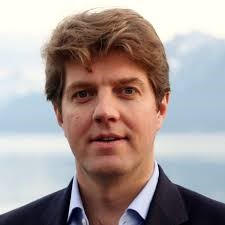
Alexis du Roy de Blicquy
CEO of The Family Business Network
Alexis is the CEO of The Family Business Network (FBN), the world’s leading network bringing together over 4,200 business owning families, 20,000 individual members in 32 chapters covering 65 countries. Prior to FBN, Alexis held senior positions, at Lhoist, Verlinvest, Armonea and IFC (World Bank Group). For 6 years, he was Chairman of ToolBox, supporting NGOs by offering professional consultancy.
A Belgian-Swiss citizen, Alexis holds a Master in Management Science (Solvay Business School), is an INSEAD IEP and IMD HPL Graduate.
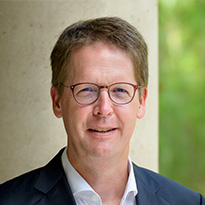
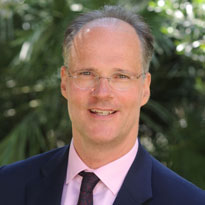
Heinrich Liechtenstein
Professor Professor of Financial Management, IESE Business School
Professor Liechtenstein holds a Ph.D. in Managerial Science and Applied Economics from The Economics School of Vienna, Austria, a Master’s degree in Business Administration from IESE Business School, and a BSc in Business Economics from the University of Graz.
Professor Liechtenstein specializes in entrepreneurial finance, management of wealth and governance of entrepreneurial families. He is co-author on several publications on private equity. His ongoing research in this field focuses on operational value creation in private equity, impact investing and governance of entrepreneurial families.
Professor Liechtenstein lectures in the MBA and Executive Programs.
As a consultant he collaborated with leading families and financial institutions and serves on the board of family controlled foundations.
Prior to his academic career, Professor Liechtenstein was engaged in the family owned Liechtenstein Global Trust (LGT) dealing with ultra high net worth individuals. He also advised families within the Boston Consulting Group and established and sold two successful businesses.
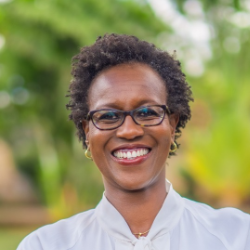
Mary-Ann Musangi
Vice Chair of the Kenya Association of Manufacturers (KAM)
Mary-Ann Musangi is an accomplished African entrepreneur and business leader with over 25 years of experience across the advertising, banking, hospitality, and FMCG sectors in African markets. As the Managing Director of HACO Industries, she has helped drive the company’s growth into a purpose-driven African manufacturing brand focused on innovation, sustainability, and regional impact. She champions renewable energy, sustainable packaging, and inclusive economic growth through local manufacturing, job creation, and the empowerment of women and youth.
Mary-Ann recently became the Vice Chair of the Kenya Association of Manufacturers (KAM), having previously served on its Board. She also serves on the boards of SMART Applications International Limited, the United Nations Global Compact Kenya Network, and Tiny Totos Kenya Limited. Her leadership has earned her several recognitions from KAM, including the 2025 Woman Industrialist of the Year Award, as well as accolades in the Woman Executive of the Year and ESG Leadership categories.
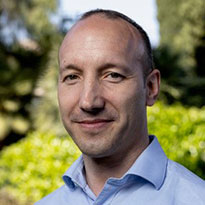
Marc Sosna
Executive Director of Learning Innovation Unit, IESE Business School
Marc is the Executive Director of the Learning Innovation Unit at IESE Business School, I and our team & faculty continuously strive to push the boundaries of how top-executives learn best. Exploring, conceptualizing, designing, and executing learning experiences that have the highest possible impact for leaders in a globalized world. Special focus on Action Learning, Experiential Learning, Blended Learning, Online Learning, among others.
Experienced project manager and consultant for several international corporations and institutions, including projects for/in partnership with the World Bank, the EBRD, the Batten Institute at Darden/University of Virginia, the CEO-Collaborative Forum, or EFER, the European Forum for Entrepreneurship Research.
Involved in research, consulting, and various international executive education and in-company programs across five continents.
Co-author of the book “Entrepreneurial Icebreakers” (2015), published by Palgrave Macmillan, as well as academic and practitioner articles in leading strategy journals, teaching cases, book chapters, and course materials.
Strong focus on entrepreneurship and strategy – specifically business models, growth and turnaround strategies. PhD research focus: Unleashing growth through business model innovation (Department of Strategic Leadership & Global Management, Technical University Berlin).
Studied/worked/lived on four different continents (Europe, US, Africa, Asia).
In Collaboration with

Partners

IESE is a dynamic community of scholars and practitioners who will welcome you to Barcelona, a traditional and welcoming Mediterranean city. It is a city with a great number of tourist attractions and a friendly atmosphere that will offer conference participants and their families plenty of opportunities to enjoy their stay here, over and above the academic program we are preparing for you. IESE has reached special agreements for a limited number of rooms with the following hotels at special rates.
The hotel bookings will be handled by Anna Sánchez (anna@vintage.cat), who will send the paying link upon requests:
- Sansi Pedralbes → 5-minute walk from IESE
Av. Pearson 1-3, 08034 Barcelona - NH Constanza → 10-minute by car from IESE
De i Mata, 69-99 , 08034 Barcelona - AC Victoria Suites → 15-minute walk from IESE
C/ Beltrán i Ròzpide, 7-9 (before Av. Pedralbes, 16), 08034 Barcelona - Hotel Hyatt Sofia Barcelona → 25-minute walk from IESE
C/ Pl. de Pius XII, 4, Les Corts, 08028 Barcelona