IESE Insight
Political polarization shapes how Americans face risks

Voters for Republicans or Democrats evaluate risk differently, though prosocial messaging could help to reduce those gaps.
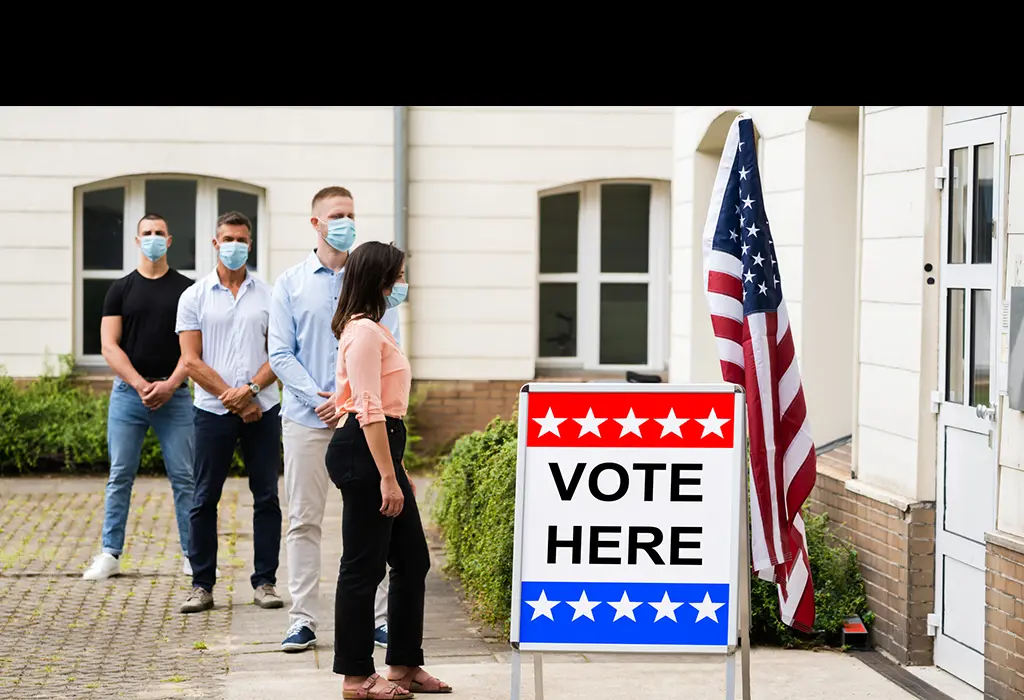
When COVID-19 swept the world, it strained healthcare systems and tested social cooperation. In the United States, political polarization became evident in everyday behavior — from mask-wearing to attitudes toward lockdowns and, eventually, vaccines.
But were these differences driven simply by political messaging and partisan identity? Or did they also reflect deeper patterns in how different groups approach risk and social responsibility?
According to research published in the Journal of Behavioral Decision Making, it seems it’s closer to the latter.
Using a pandemic-like simulation, my research colleagues Jan K. Woike, Patricia Kanngiesser, Ralph Hertwig and I found that people who voted for the Republican candidate, Donald Trump, or the Democratic candidate, Hillary Clinton, in the 2016 U.S. presidential election made systematically different risk choices — even when politics and COVID-19 were stripped from the scenario. At the same time, both groups became more cautious when nudged with a brief prosocial message.
Our results suggest that polarization during COVID-19 was not just about political affiliations or media narratives. Rather, it also reflected more intrinsic differences regarding risk tolerance and social preferences, which can, in turn, affect one’s politics.
A game of risk and responsibility
For our research, we recruited 819 Americans who had reported voting for either Trump or Clinton. They were then asked to play a “transmission game,” in which players made decisions designed to mirror the central dilemma of a pandemic: Actions that increased personal benefit could also increase the risk of spreading infection.
In the game, participants repeatedly chose between a safer option that yielded a small reward and a riskier option that yielded a bigger reward but increased the probability of becoming “infected.” “Infection” meant losing bonus earnings, creating a trade-off between short-term gain and collective benefit.
We manipulated two aspects of the task while keeping the incentives identical. One of them was framing: Some participants played a neutral version of the game, using abstract terms like colors and letters, while others played a pandemic-framed version, using language that purposefully triggered COVID-19 memories (words like “healthy,” “infected” and “mask vs. no mask”).
In some cases, we also introduced a normative prompt: Some players saw a short message encouraging them to choose the safer option to protect others, while for others, no message appeared.
We found that Trump voters chose the riskier option more often than Clinton voters in every single version of the game, including the neutral framing.
In other words, the partisan gap persisted even when the political connotation was turned off, supporting the idea that differences in pandemic behavior may reflect underlying traits — such as comfort with risk or concern for others — rather than party identity alone.
The differences were statistically clear but not extreme. Still, when small behavioral gaps accumulate over repeated interactions, they can have big implications.
Behavioral shifts across political lines
While the gap persisted across different versions of the game, both groups shifted their behavior in the same direction when the context changed.
Voters for either candidate took fewer risks when the game was framed as a pandemic rather than as an abstract task — even though Trump voters still took more risks than Clinton voters did. They also reduced risk-taking when shown a prompt reminding them to protect others.
This is important because it shows that, despite polarization, people can indeed be influenced by certain kinds of messaging. Trump and Clinton voters responded differently in absolute terms, but they reacted similarly to changes in how the problem was presented.
To understand what these behavioral differences might mean at scale, we ran large simulations using participants’ actual choices. These simulations modeled how “infection” would spread under the game’s rules across many repetitions. The results showed a big gap in final “infection” rates — from about 28% in the lowest-risk scenario to nearly 80% in the highest-risk one.
Granted, these are not predictions about real pandemics, but they illustrate how modest differences in average behavior can generate drastically different collective outcomes.
In other words, small shifts in individual decision-making can compound into large system-level consequences.
Managing shared risk in polarized environments
For business leaders, the findings offer a nuanced view of managing shared risk in polarized environments. It’s worth keeping the following things in mind:
- Risk-taking differences between employees may persist even when politics is not explicitly at play.
- General interventions can indeed work across diverse groups. Clear framing and simple prosocial messaging can reduce risk-taking, even if the degree to which that risk is reduced will vary.
- Mixed environments matter. Workplaces can bring people of different cultures and socioeconomic backgrounds together, so strategies that rely on group-specific messaging may miss out on influencing behavior through more universal appeals.
A healthy reminder: safer choices protect everyone’s interests
In an earlier version of this “transmission game,” published in Science Advances in 2022, my research colleagues and I tested how people would respond to various behavioral interventions in a simulated outbreak.
We evaluated five strategies to reduce risk-taking:
- Showing people what others were doing.
- Letting them learn from others’ past outcomes.
- Offering simulations of possible futures.
- Illustrating chains of infection.
- Delivering moral or prosocial messages.
We found that interventions based on observing others’ behavior or learning from prior groups backfired, leading to higher risk-taking and higher infection rates.
By contrast, tools that helped participants visualize transmission — such as simulations and infection trees — produced modest reductions in risky choices.
The most effective strategy was normative messaging that emphasized responsibility toward others, such as reminding players that safer choices protected everyone’s interests.
Together, these experiments suggest that effective public communication should focus less on what others are doing and more on linking individual actions to social consequences.
Even in polarized environments, well-designed messages can meaningfully shift behavior — and small changes can have big effects on collective outcomes.
MORE INFO:
“Partisan differences in risk-taking in a simulated pandemic,” by Jan K. Woike, Sebastian Hafenbrädl, Patricia Kanngiesser and Ralph Hertwig, is published in the Journal of Behavioral Decision Making (2026).
“The transmission game: testing behavioral interventions in a pandemic-like simulation,” by Jan K. Woike, Sebastian Hafenbrädl, Patricia Kanngiesser and Ralph Hertwig, is published in Science Advances (2022).
This article is included in IESE Business School Insight online magazine No. 172 (May-Aug. 2026).
READ ALSO: