Stories
IKEA CEO Juvencio Maeztu: Leading with Humility, Simplicity, and Humanism
The President of Ingka Group (IKEA) and IESE MBA alumnus explains how simplicity, values and purpose guide leadership in a complex world
December 15, 2025
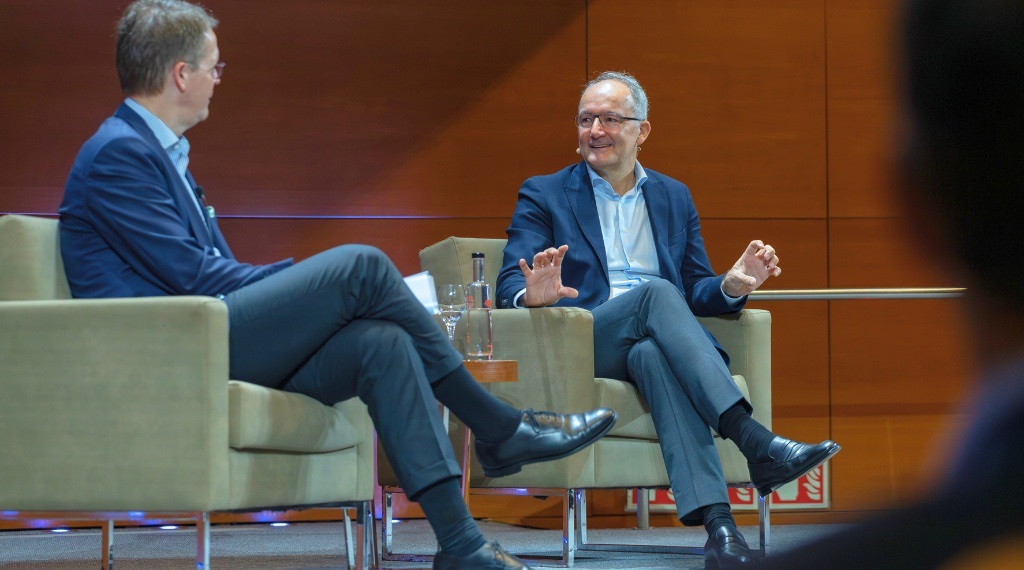
Thirty days into his new role as CEO of Ingka Group (IKEA), Juvencio Maeztu describes the period with one word: “humble.” His first weeks were spent travelling, visiting stores and listening to co-workers, customers and competitors. “I wanted to be as far from headquarters as possible and as close to the customer and the teams as possible,” he told IESE Alumni. In a polarized world, he believes humbleness and willpower are essential.
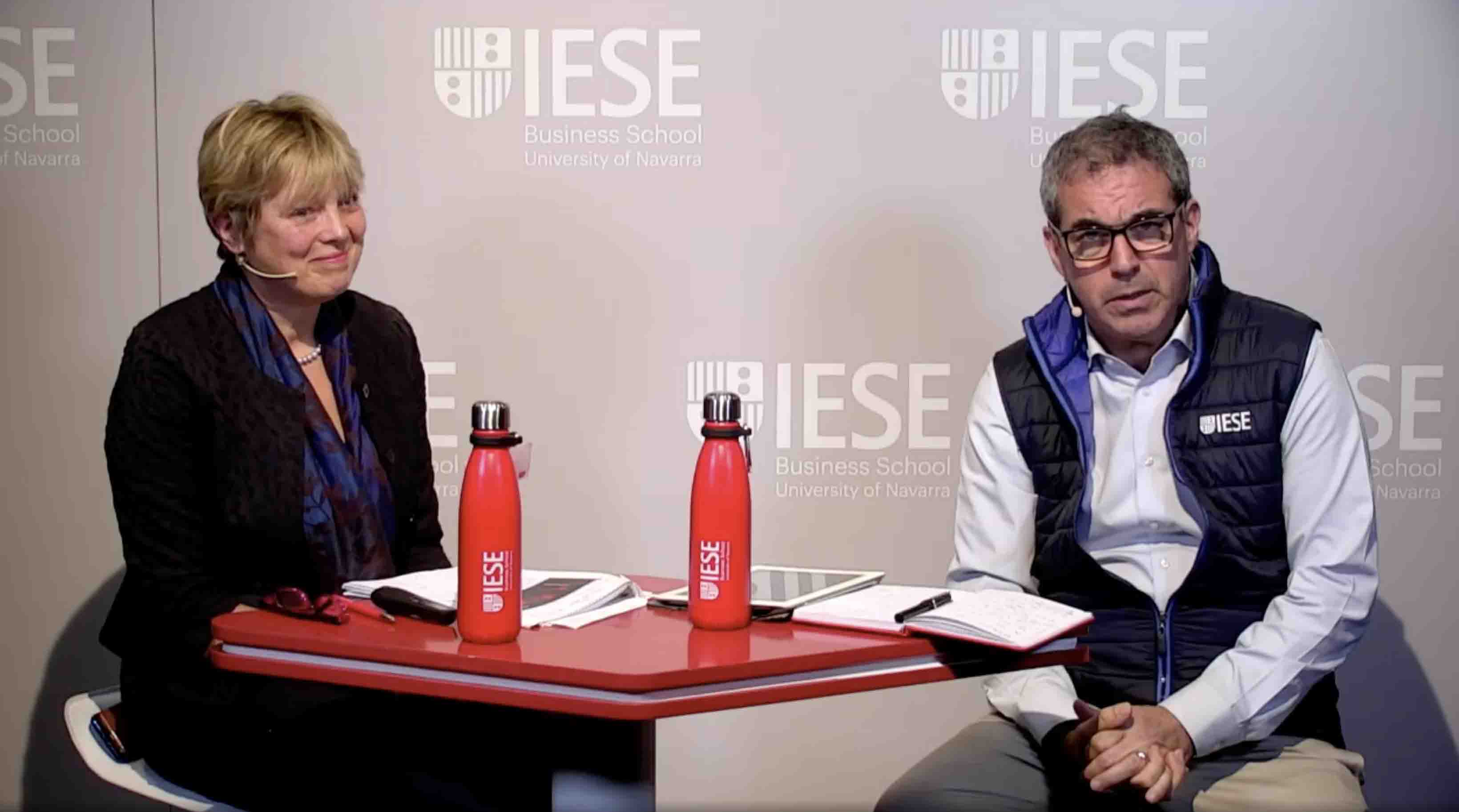
An IESE MBA alumnus, he returned to campus for a Global Leadership Session moderated by Dean Franz Heukamp, reflecting on founder values and leading responsibly in turbulent times.
Leading Through the Founder’s Simplicity
After 25 years at IKEA, the CEO sees bureaucracy as the main risk of growth. His mission is to safeguard IKEA’s cultural DNA. “You need to find the essence of the founders. They look for simplicity.” For him, simplicity is an act of rebellion: “I try to become one of the most rebel by looking for simplicity and for new ways of doing things.”
He highlighted three traits he admires in founders: a deep sense of purpose, a drive for continuous improvement, and a strong focus on people. Early in his career he embraced risk-taking, encouraged by the advice: “make many fiascos but not make the same fiascos twice.”
The founder philosophy was rooted in practical insight. “Founders are interested in what else can be done, not KPIs or sugar coating.” Ingvar Kamprad, IKEA’s founder, would ask truck drivers how much air they were transporting, often finding it did not match the KPI reports. The lesson: trust reality, not dashboards.
“They see things in a more simple and determined way; there’s too much fog in management today,” he said. This is why he urges leaders to “see the company through the eyes of the founder,” recalling the moment one founder told him: “You are the best, but maybe you’re not good enough.”
Affordability: Growing to Serve the Many
Maeztu then turned to the core of IKEA’s strategy: affordability. “Growth is not only volume but also to achieve business goal: a better life.” Affordability, he explained, is central to IKEA’s mission to “create a better everyday for every people” by ensuring that home solutions remain within reach for the many.
For him, affordability is above all a long-term principle: “Affordability is not an objective; it is a vision”, a vision of a future “where affordability should be affordable to create a better life at home.”
Finding Similarities in a Polarized World
“In a world in global disruption and escalation of inflation, we need to keep reducing costs. Sustainability needs to be affordable.” Yet despite this complexity, he chooses to focus on what unites people. “I prefer to see the world on similarities, not differences.”
Leading IKEA’s expansion in India confirmed this belief. Beneath social and political differences, he found universal needs: “love for family, food, low price, sustainability, the importance of home.” “While it’s true that there’s more polarization, people is the same all over the world.”
This anchors IKEA’s inclusive philosophy: “We work for the many. The more inclusive, the better the business.”
In a climate of mistrust, leaders must articulate their why, not only the what and the how, essential, he said, to leading with a moral compass.
A Leadership Path Built on Humility and Craft
Maeztu’s leadership was shaped by an unconventional beginning. After IESE, he chose a modest job in a garden center while peers accepted “big titles, company cars, business cards.” He wanted to “learn the craft.” “That experience cemented my leadership.”
His career advanced through roles as Store Manager in Madrid and Seville, Country HR Manager for Spain and Portugal, and later member of the UK & Ireland management team, where he led IKEA’s London flagship, then its top-performing store, a role he accepted by “going down two levels” to increase impact.
His enduring principle: “Don’t do what is established. Follow your gut. Work with passion and you will performance.”
Leading With a Moral Compass
To close, he posed a question every organization should confront:
“If IKEA would disappear, would the world be better or worse?”. For him, this defines corporate purpose: “Companies must help society for the best.”
Profit only matters when used with long-term intent: “profit used for the long term: a company that creates a better world.”
Leading in uncertainty, he added, requires returning to one’s values, a responsibility he sees as being a custodian of IKEA’s values. He links this directly to IESE: “I connected to IESE for humanistic leadership, grounded in values.”
It is this clarity of purpose and long-term conviction, he concluded, that enables organizations to lead responsibly in a disrupted world.