IESE Insight
Sagrada Familia: leadership lessons in vision, mission and innovation

The Sagrada Familia by the architect Antoni Gaudí is proof of how to turn vision into reality. For business executives, the Barcelona monument offers profound lessons in how to lead.
By Yih-Teen Lee
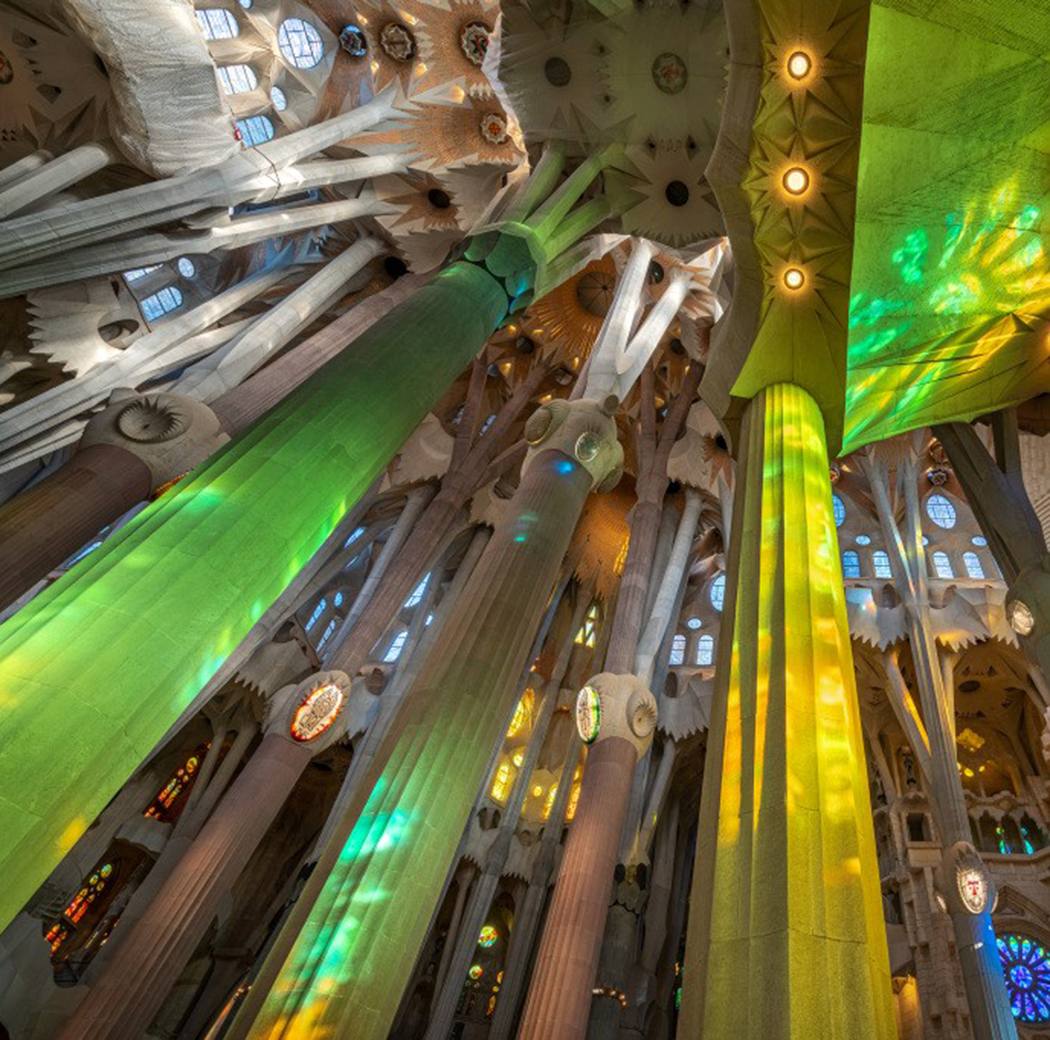
“The tree outside my window is a great teacher,” the architect Antoni Gaudí once said. Indeed, stepping into the temple of the Sagrada Familia, his most famous work, is like stepping into a forest. Pillars rise like trees, separating into overlapping branches that hold up the ceiling. It’s a revolutionary structure in architecture, and yet the structures can be found in nature.
Gaudí himself is a great teacher, demonstrating how visionary leadership can prioritize the truly important over the distracting noise of short-term results and ego. More than 140 years and counting in the making, Gaudí’s Sagrada Familia offers profound lessons for executives in how to imbue projects with vision, mission and innovation.
An inspiring vision
When Gaudí first took over the Sagrada Familia project in 1883, he inherited plans to build a conventional neo-Gothic church. After initially following those plans, observing and reflecting on the project’s scope and purpose, he decided something radically different was called for.
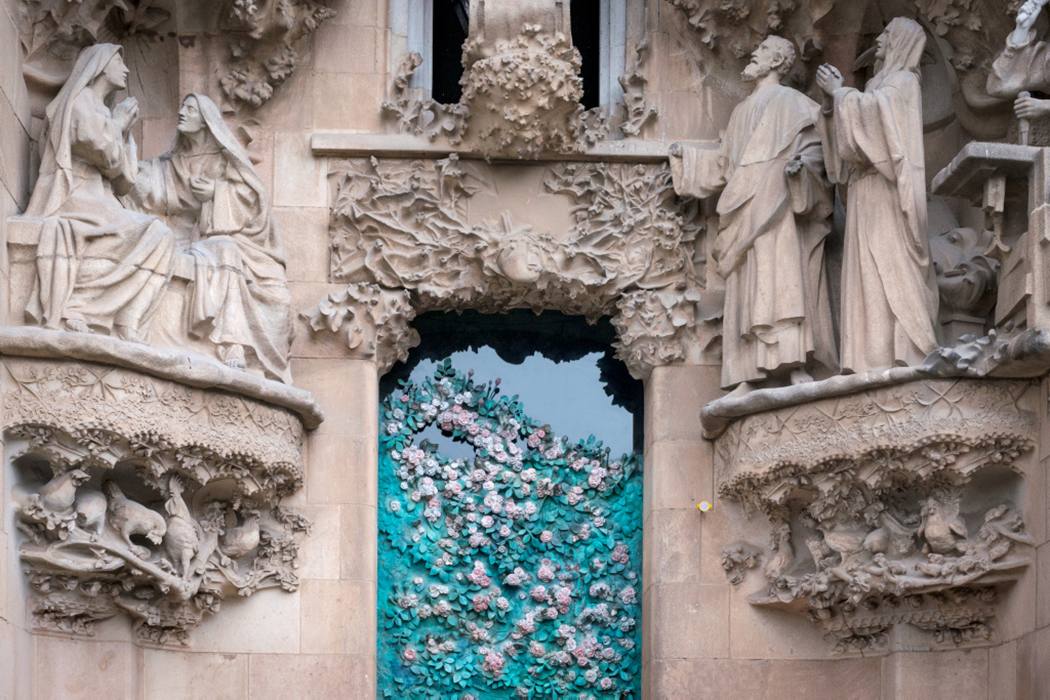
By the 1890s he envisioned an immense basilica with 18 spires, some of them colorfully enameled, and three monumental façades. The façades are crammed with natural and religious motifs, and there are spiral staircases, a forest-like interior and stained glass refracting different primary colors onto the cool white walls as the day progresses. With such an awesome vision, Gaudí wanted to both dazzle and humble the visitor, for them to “see what is there and what is not there.”
Gaudí’s vision evolved continuously over decades, as he used other architectural projects as laboratories of ideas that could be put to use in the basilica. Over time, his architectural vision — with its structure, symbolism, geometry and spirituality — became increasingly coherent.
For Gaudí as for executives, vision is rarely perfect from the start, but rather the result of learning, reflection and humility. True vision is crafted and recrafted to provide coherent, meaningful direction.
A shared mission
The practicalities of turning such a vision into reality were daunting. If the master craftsman was, on the one hand, a dreamer, he was also, on the other, a realist. A vision only matters when others can see what you see, when others are moved to join your quest.
A master craftsman who worked among master craftsmen, Gaudí created drawings and extensive plaster models of his planned church, and knew how to convey the meaning in simple language and vivid metaphors. He also allowed his colleagues — ironworkers, stoneworkers, ceramicists, many of them lifelong collaborators — to work out the details without constant oversight. When many of these drawings and models were lost in a fire after the architect’s death, those assistants and collaborators were able to recall much of the plan and communicate it to the next generation of architects.
The Sagrada Familia required vast sums of money to build, much greater than any of Gaudí’s previously funded projects. Moreover, as an expiatory temple, it would need to rely on individual alms rather than institutional grants for funding. It would also take a great deal more time, measured not just in years but in generations.
Gaudí accepted this reality of innovation: Just having a great idea wasn’t enough; he also needed to convince others of its greatness and inspire them to contribute, both now and long into the future. He was a tireless fundraiser, even pouring his own earnings into realizing his dream. Yet the lion’s share of the funds came from thousands of individual donations, truly making it a work by and for the masses who had been moved to buy into Gaudí’s vision.
Gaudí showed that people are motivated by meaning that touches both intellect and emotion. A mission must be felt, not just understood, and communicated though resonance rather than command.
Innovation in action
Work on the Sagrada Familia has been done in stops and starts. Gaudí didn’t see this as a bad thing. Indeed, “it is necessary to alternate between reflection and action, which complete and moderate each other,” he said.
Slow periods in the building were used to take stock, to dream and design new solutions, and for Gaudí to develop his skills in new directions, as he worked on many other projects at the same time. Later, from 1914 until his death in 1926, he devoted his time exclusively to building the Sagrada Familia.
Much of the innovation can be found in the architecture itself: the tree-like column system instead of straight pillars, the biblical storytelling on the exterior façades rather than on the interior walls, the use of catenary arches throughout. The structure of the project was also innovative: In creating the detailed scale models and geometric rules that allowed future architects to continue his work, Gaudí was designing a framework for collaboration across generations.
Gaudí was extraordinarily creative and innovative, but every innovation responded to the larger mission of bringing greater light, strength and harmony to his structures. Innovation is meaningful when it serves a purpose; creativity detached from purpose becomes novelty.
Building a legacy
Gaudí knew that the Sagrada Familia was a work he would never live to see realized. When he died in 1926, hit by a tram while walking to Mass, he had built the Nativity Façade and erected four towers, only one of which was complete. A century after his death, the central Tower of Jesus Christ, the last of the towers, was finally completed.
But even as the project has remained unfinished, its leadership lessons feel complete.
- Through vision, Gaudí imagined boldly and refined patiently until form and purpose aligned.
- Through mission, he moved people with resonance rather than authority, inviting them to become partners in a shared endeavor.
- Through innovation, he created structures and solutions that enabled others to continue the work across generations.
After dedicating a lifetime to a project, a lesser person than Gaudí might have felt frustrated not to see its completion. Yet he accepted, even welcomed, that possibility. “There is no reason to regret that I cannot finish the church,” Gaudí said. “I will grow old and pass away, but its life must depend on the generations it is handed down to.”
MORE INFO: The article “The art of profound visioning: Leadership lessons from the Sagrada Familia” by Yih-Teen Lee, as well as a case study on Gaudí, are both available from IESE Publishing. IESE leads tours of the Sagrada Familia, followed by a discussion, during Executive Education programs at IESE Barcelona.
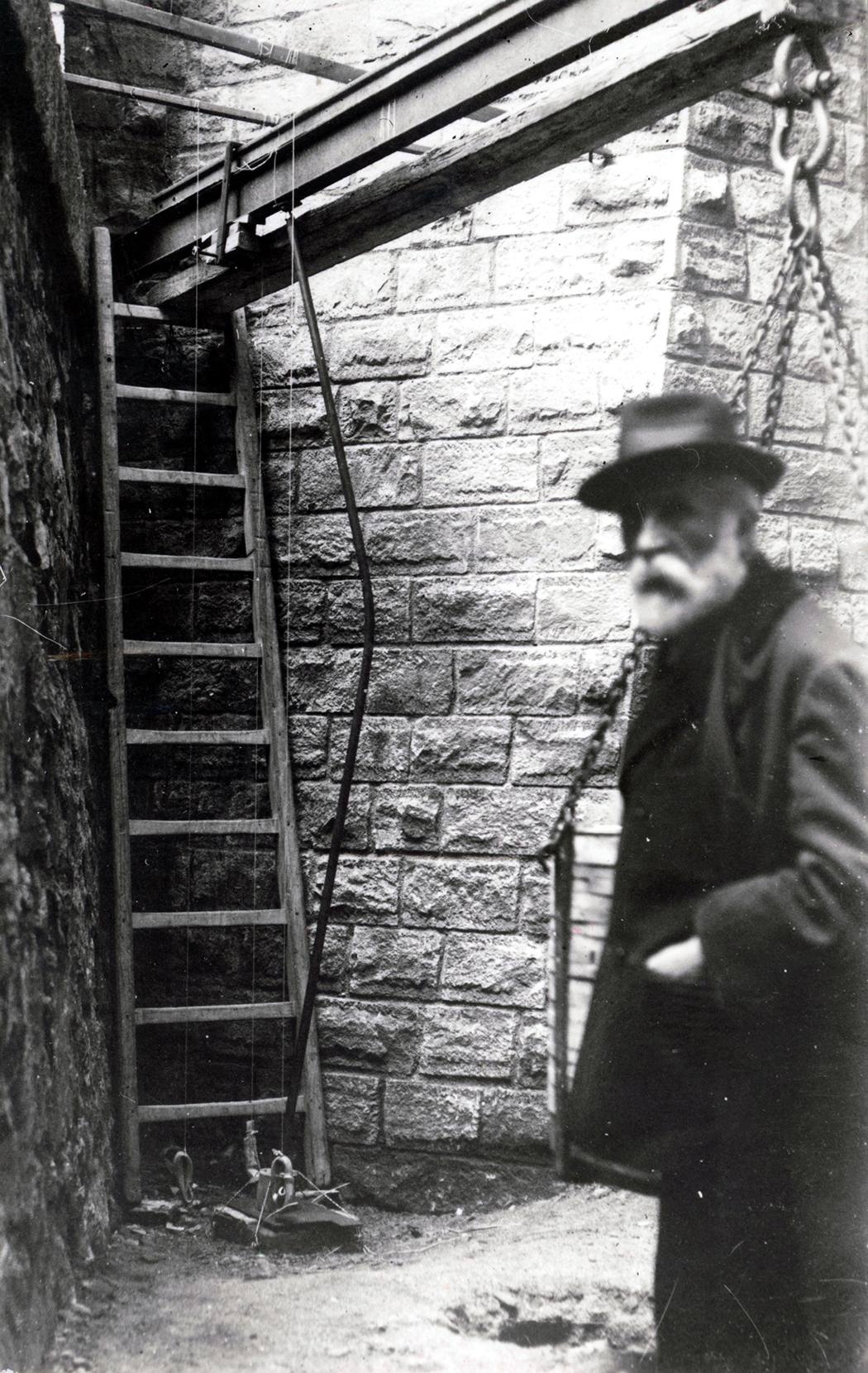
Antoni Gaudí: the focus was on the project, not on himself
Ask yourself: What kind of leader are you? What kind of leader do you want to become?
A version of this article is published in IESE Business School Insight magazine #154.
If you liked this article, you may also enjoy reading: The cornerstones for building a better business world