IESE Insight
10 life lessons for leading in a polarized world

From global fragmentation to demographic change, leadership feels uncomfortable today. Here is my advice for staying balanced and resilient in this turbulent world.
By Anita Bhatia
The rules-based order in which many of us grew up no longer exists. Old alliances are breaking apart and new ones have not yet been fully formed to replace them. We see a resurgence of economic nationalism and state capitalism. Multilateralism has been corroded, and because there is less belief in mutual benefits, the world seems a less trusting, more unkind place.
Apart from global fragmentation, huge demographic trends are also shaping the world. Europe, the United States and Japan are aging societies, while African and Asian societies are young and growing. The sources of power, ideas, creativity and innovation are increasingly going to come from those parts of the world.
On top of this is a massive system shift coming from AI. The fact that this powerful new technology is being developed without enough women at the table is frightening. What are the future implications of having centuries of data on sexism and gender discrimination embedded into AI algorithms? Moreover, technology’s focus on frictionless transactions is having serious consequences on our relationships. There is less focus on community and human connection, giving rise to an epidemic of loneliness.
But my goal is not to depress you but to offer some practical tips to help make the world a less polarized, kinder, more trusting place.
1. Lead with your values
Values are not abstract statements. They are decisions based on what you stand for. They are what you choose to do or not to do. Timothy Snyder, a historian who has written extensively on how tyranny is allowed to flourish, describes a phenomenon called “anticipatory obedience.” This is when you change your values before you have to, because you think that is what authority is going to demand of you, so you end up doing things that may not actually reflect your values — but then freedom is lost and systems collapse. I urge you, “Do not obey in advance.” Always lead with your values.
2. Choose your words carefully
The old adage is true: People may not remember what you said, but they will always remember how you made them feel. So, be like a peach: Your values have got to be the hard core, but the outside has to be very soft. That is how you will be heard.
3. Build a community and pay it forward
Especially for women, we are riding on the shoulders of many people who have gone before us. When you’re given a task or a job, actively look to bring other, younger people along with you. What are you doing to make space for others, build a community and connect people? Because human connection is so important today.
4. Be humble
I was once lucky enough to work with a Nobel Laureate at the World Bank, and I remember being struck by how humble this person was. When we achieve something, we can sometimes think we’re indispensable, that no one else can do what we can do. But that’s not true. Everybody leaves. Everybody can be replaced. So stay humble.
5. Ask for help when you need it
I remember the first time I was asked to run a project, I said, “I think you have the wrong person,” because I didn’t know the first thing about what I was being asked to do. And they said, “That’s precisely why we’re asking you, because we want somebody who is going to bring a fresh perspective.” Sometimes we think that, in order to do well, we must know everything and have all the answers. After thinking about it, I said, “Okay, if I’m going to do this, this is what I’ll need.” Don’t ever be afraid. Instead, ask for whatever you need to succeed.
6. You cannot have everything you want all the time
Here’s my spin on a well-known saying: “You can have all of what you want some of the time, some of what you want all of the time, but you will never have all of what you want all of the time.” So be ready for that. I was reminded of this when I decided to take a career break to spend more time with my children when they were little. It was wonderful. I know it’s not always easy or possible for everybody, but I never regretted it.
7. Get a risk manager
A risk manager could be anybody — a person you can have real conversations with, who is there for you before you make big decisions, who keeps you from jumping into things too quickly. But it can also be an imaginary person who sits on your shoulder and with whom you have imaginary conversations. Because we are connected 24/7, there is a compulsion to respond immediately to everything. But you don’t have to. Take your time and talk things over with your risk manager first.
8. Create space and time for nature, and be in awe of something
When you are in awe of something, it releases serotonin, which makes you happier and more productive. I look at the sunrise every day, and it makes me happy. Make time to be in nature, especially if you work in a city, because when you are in nature, you will appreciate what the universe is giving you. And you will also realize that we only have one planet — there is no Planet B. So, in addition to being a steward of your own life, you will realize that you need to be a steward of this beautiful planet. So get out there!
9. Lead with courage, conviction and compassion
We need leaders who not only have the courage of their convictions but, when talking to somebody else, they also show compassion, assuming positive intent. You do not know fully what’s going on in another person’s life. If compassion doesn’t come naturally, maybe talk to your risk manager, who can help you get into the practice of being empathetic toward other people. Doing so will make your life so much easier.
10. Be grateful for your privilege
We are all incredibly privileged. What are you going to do with your privilege? What is your purpose? For me, I want to transform the lives of women. This doesn’t mean I’ve achieved it or that I’ll ever see full equality in my lifetime. But that doesn’t stop me from trying.
There are still not enough women in the C-suite, in public life, in parliaments, in cabinets. I remember a finance minister thanking me for raising issues pertaining to women that were thrown into stark relief during the COVID-19 pandemic — such as the extra care burden placed on women, the increase in domestic violence against women, as well as the increase in female labor force participation at the time, given that so many essential workers were women. There is still so much work to be done related to resources, representation and rights.
One small story of hope: I once met a woman in a refugee camp who, by being on the local council, had managed to get street lights installed, which meant women could walk more safely at night, and the other thing she did was get the food parcels made a bit smaller, because they were currently too big and heavy for the women to carry on their heads. This is a beautiful illustration of how, just by having somebody at the table, one person can make change, not only in her own life, but in the lives of her entire community.
For the short time you are on this planet, what are you going to do to try to make the world a better place in some small way? Focus on that and make it your compass.
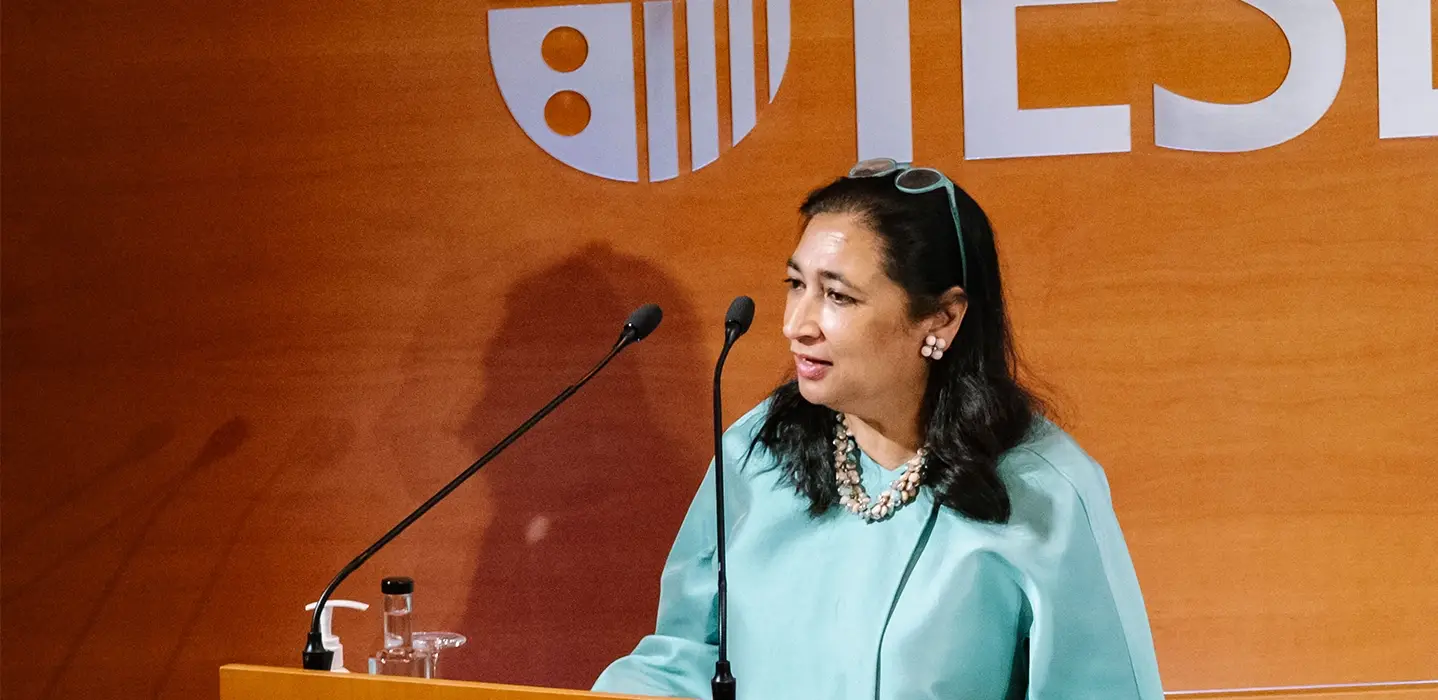
Anita Bhatia was the keynote speaker at the 2026 Women in Business Conference held at IESE Barcelona under the theme of “The Ripple Effect: Amplifying Voices and Impact.”
This article is included in IESE Business School Insight online magazine No. 172 (May-Aug. 2026).
READ ALSO:
Rising together: how women’s tribes are rewriting leadership