IESE Insight
London, New York and Paris ranked all-around smartest cities for 5th year

Europe and Asia lead the 2026 IESE Cities in Motion Index, a ranking that recognizes sustainable urban development.
- The U.K. capital stands out for its unrivaled international profile and excellence in human capital, governance and urban planning.
- Seoul returns to the top 10 thanks to strengths in technology, mobility and human capital.
- Size isn’t synonymous with success: Medium-sized cities compete with megacities on quality of life.
London, New York and Paris have topped the 2026 IESE Cities in Motion Index (CIMI) for the fifth straight year, in a broad-based ranking that measures how smart, sustainable, economically successful and well-run the world’s leading cities are. (Last year’s index can be viewed here.)
The index, prepared by IESE professors Pascual Berrone and Joan Enric Ricart, highlights that for a city to perform well, it isn’t enough to dominate in one or two key areas; they need strength across many key categories.
The study analyzes 183 cities in 92 countries across nine critical dimensions — economy, human capital, social cohesion, governance, environment, mobility and transportation, technology, urban planning and international projection. This year, the study introduces a new sub-index that explicitly measures coherence across these dimensions over time.
London, New York and Paris at the top
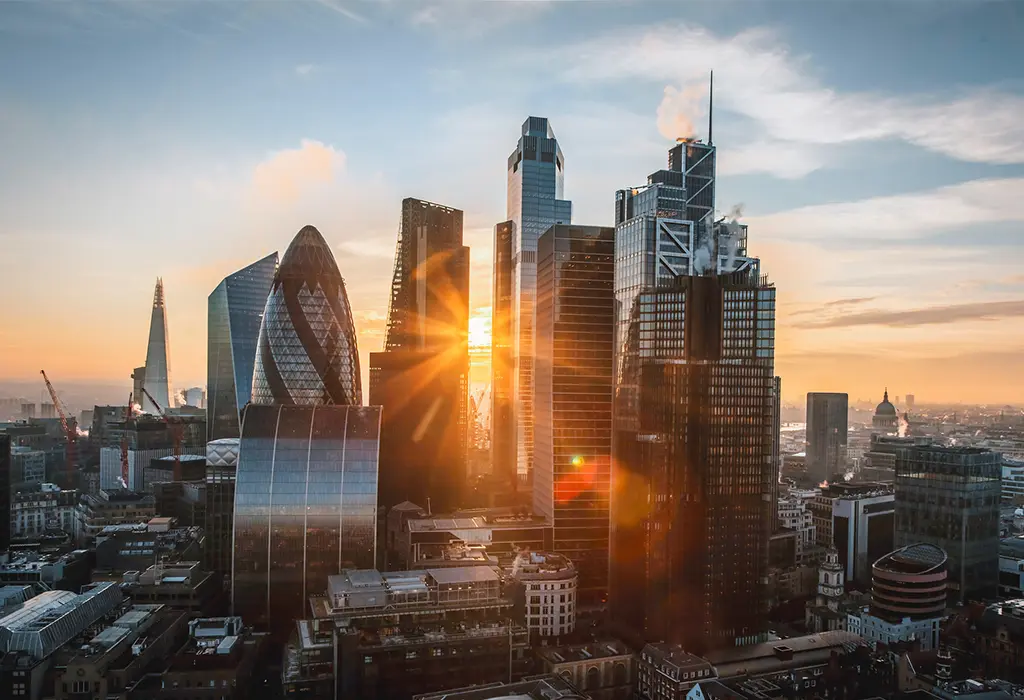
London retains its global leadership thanks to a combination few cities can match; it leads in human capital, governance, urban planning and international projection, and maintains a strong position in economy, mobility and transportation, and technology. Alongside Zurich and Amsterdam, it stands as a benchmark of dimensional balance.
Second-place New York stands out for its economic strength, mobility and transportation, human capital and international profile, but suffers from low scores in social cohesion and environment. Paris, meanwhile, is notable for its international profile and talent base.
- London
- New York City
- Paris
- Berlin
- Tokyo
- Singapore
- Amsterdam
- Copenhagen
- Seoul
- Beijing
European and Asian cities dominated the 10 leading cities, with Seoul returning to the top 10 for the first time since 2018, driven by its strengths in technology, mobility and human capital coming into maturity.
Five archetypes for a single question
What makes a city successful and resilient? The index structures its answer into five profiles:
- Global metropolises (7 cities, including London and New York): strong in economy, human capital, international projection and governance, but weaker in environment and social cohesion.
- Economic-technological hubs (27 cities): excel in those two dimensions; examples include Dubai and Abu Dhabi in technology, and San Francisco and Seattle in economy.
- Quality-of-life cities (57 cities): balance environment, social cohesion and governance with solid human capital and mobility; includes Scandinavian capitals, Madrid, Barcelona, Wellington and Vancouver.
- Mid-development cities (53 cities): moderate performance across all dimensions without clear strengths; includes Doha, Tel Aviv and Shenzhen.
- System-gap cities (39 cities): their main improvement potential lies in governance or technology.
Zurich overtakes London in the balance ranking
A notable addition to this year’s index is the complementary perspective, the Sustained Competitiveness Index (SCI), which rewards balance across dimensions and stability over time. The top 10 cities here are:
- Zurich
- Amsterdam
- London
- Copenhagen
- Santiago de Chile
- Paris
- Tokyo
- Berlin
- Basel
- Cologne
The SCI combines current ranking position, three-year trajectory and consistency across nine dimensions with equal weighting. These components are largely independent, meaning a city can perform well in the main ranking but underperform in the balanced ranking if it is overly specialized or has structural gaps.
Zurich leads the new index by combining economic leadership with strong performance in social cohesion, environment and governance. Amsterdam shows the lowest dimensional variance among top cities, alongside Zurich and London. Meanwhile, New York presents the sharpest contrast: 2nd in the traditional ranking, it falls to 33rd in the SCI due to imbalances between economic/technological strength and weaker social and environmental outcomes.
The presence of Santiago in 5th place, along with Basel and Cologne in the top 10, highlights that sustainable development depends on model coherence rather than population size.
Three lessons and a calculator
The 2026 index offers practical conclusions for managers and policymakers:
- Specializing in a single dimension may work in the short term but creates long-term structural vulnerabilities.
- Neglecting social cohesion undermines medium-term economic growth, as persistent social deficits correlate with weaker governance and economic outcomes.
- International projection is no longer only about physical connectivity; it also depends on urban experience, global professional attraction, and cultural and gastronomic reputation.
A complementary tool expands the scope of both indices: the CIMI calculator. Available on the project’s redesigned digital platform, it estimates the position of any city not included among the 183 evaluated, and places mid-sized cities — often absent from international rankings — within the global competitiveness map.
MORE INFO:
Read the full IESE Cities in Motion Index 2026.
Explore the map and the Cities in Motion Index (CIMI) calculator.
ALSO OF INTEREST:
Common challenges, similar responses: the world’s leading cities converge on strategy
London, New York and Paris top the rankings for smart and sustainable cities