IESE Insight
Douglas Massey: how to manage migration effectively and humanely

Migration has always been part of the human story, says sociologist Douglas Massey, so let’s manage it well for global progress.
In a world increasingly consumed by fierce debates over migration, American sociologist and demographer Douglas Massey warns of the long-term consequences of ever more restrictive migration policies.
As one of the most influential voices in the study of international migration, Massey received the 2025 Princess of Asturias Award for Social Sciences, presented by the King of Spain in recognition of extraordinary individuals who have made significant contributions in their field.
Throughout his academic career, Massey has argued that mobility is an essential feature of human history, contributing to socioeconomic development. He has documented the real-world effects of migration policies, revealing how they often hold up a mirror to society’s inequalities, especially in housing and urban segregation.
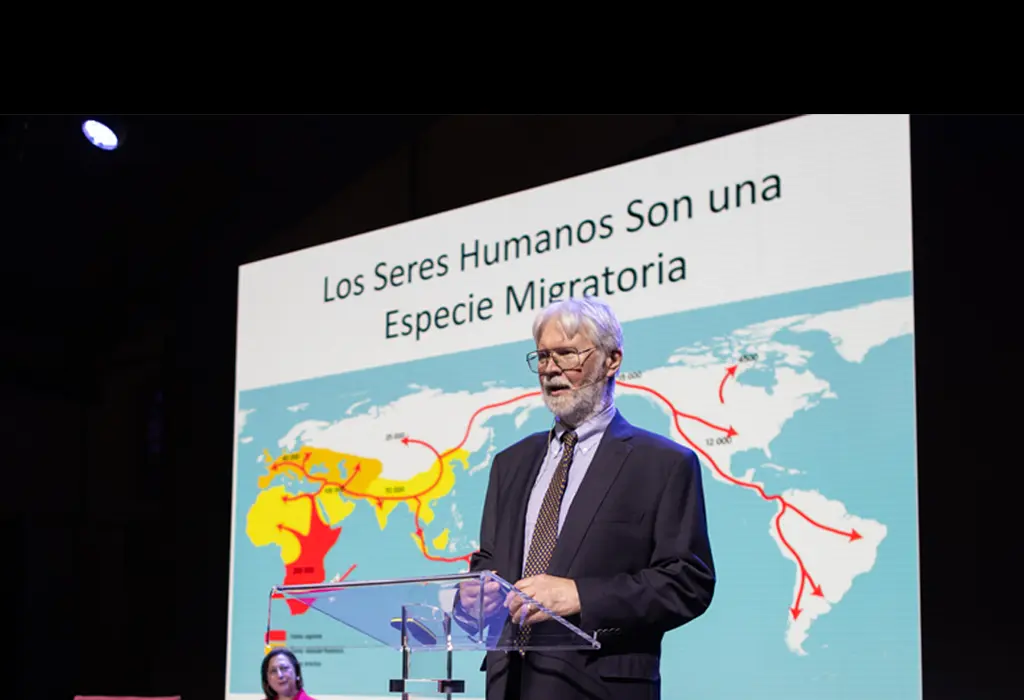
IESE Prof. Marta Elvira, a member of the Princess of Asturias Award jury, sat down with Massey during the awards ceremony in Oviedo, Spain, in October 2025, to discuss these issues.
Closing borders doesn’t stop migration — it reshapes it, as Massey explains in this interview.
Marta Elvira: Are international institutions prepared to manage migration?
Douglas Massey: Yes, and there is already a global framework for doing so: the Global Compact for Safe, Orderly and Regular Migration, ratified by most nations, although many developed countries ignore their commitments. The United States refused to sign it, and several countries that did sign it now rely on “remote control” strategies that prevent migrants from reaching their borders. This means many migrants are stopped in Africa, Turkey or Mexico before they can reach their intended destinations.
It is deeply ironic — and frankly cynical — to sign an agreement promising to guarantee rights while simultaneously designing policies that block people from exercising those rights. We must move beyond today’s mindset of repression and containment, and recognize that migration flows are a natural aspect of the human condition.
People migrate not only for economic opportunities but increasingly for protection and safety. Climate change is already generating larger, less orderly flows that are getting harder to manage. The question is not how to stop migration but how to manage it effectively and humanely. If well-designed policies — like those of the Global Compact — were implemented, many receiving countries could benefit from the arrival of new workers and younger generations to sustain their aging economies. Migration is not a “problem” to be solved but a reality to be managed intelligently.
“Migration is not a ‘problem’ to be solved but a reality to be managed intelligently”
ME: Yet the trend in Europe has been to limit entry. You have studied border closures in the United States in depth: what impact do they have?
DM: Whenever a government tries to halt a migration flow, the outcome is usually negative. The U.S. experience demonstrates this. Beginning in the mid-1980s, the United States militarized its border with Mexico, dramatically expanding its Border Patrol from 1,500 agents to 25,000 — a trend that continued under successive administrations, including Donald Trump’s.
Before that militarization, migration from Mexico was circular and regulated. Under the Bracero Program (1942-1964), workers crossed with temporary visas, worked seasonally and then returned home. Even in later decades, as undocumented migration grew, most migrants still went back: roughly 85% of entries were offset by departures. But once the border was militarized, crossing became far more dangerous and expensive — from around $500 in the 1980s to more than $15,000 today — and migrants began staying longer in the U.S.
The effect was paradoxical: a policy intended to reduce migration ended up multiplying the undocumented population, which grew from 2 million in 1988 to 12 million in 2018. It wasn’t that more people arrived — it’s that fewer went home.
ME: Have you observed the same pattern elsewhere?
DM: Yes, in Europe. In 1970s Germany, “guest workers” arrived on temporary contracts. But after the 1973 recession and the oil crisis, these programs were halted. So, migrants settled permanently with their families instead.
The evidence is clear: closing borders doesn’t stop migration — it reshapes it. Restrictive policies encourage more permanent settlements. By contrast, when documented, circular migration is facilitated, foreign populations within a country grow more slowly and sustainably.
“Closing borders doesn’t stop migration — it reshapes it”
ME: Spain has gone from being a sending country to one that receives migrants — a shift that has boosted its economy. Could it be considered a model for managing and integrating migration?
DM: Spain has a reasonably strong model of migrant integration. Before joining the European Union, Spain was a country of emigration: thousands left to go and work in Germany, France and the Netherlands, for example. At the time of joining the EU, there were fears that admitting Spain and Portugal would trigger an “invasion” of workers from southern Europe — but the opposite happened. With accession to the EU, the Spanish economy improved, its labor market grew stronger and many Spaniards returned home. Over time, Spain transitioned from being a migrant-sending country to becoming a migrant-receiving country.
Today, Brits, Americans, Germans and other Europeans choose to settle or retire in Spain. Yet many don’t integrate or learn the language. A similar trend happens in North America, where more and more Americans are retiring to Mexico for its climate and lower cost of living, but they often live isolated lives, without learning Spanish or connecting with local communities. In Mexico, these enclaves are nicknamed Gringolandia.
In contrast to Spain, the United States wasted a major opportunity. Its free-trade agreements with Canada and Mexico, signed in 1992 and 2020, liberalize the movement of capital, goods and services across borders — but not people. This is a deep contradiction: how can you integrate a continental economy while inhibiting the movement of the people who sustain it? This disconnect has produced restrictive policies that have served to increase, not reduce, undocumented migration.
Economic integration alone is not enough. Market openness and capital mobility must be paired with genuine cultural and human integration. Societies need policies that foster contact, coexistence and mutual understanding. Only then can they fully benefit from migration.
“Economic integration alone is not enough”
ME: Beyond border controls and treaties, you believe that the underlying causes of migration are rooted in inequality. To what extent does inequality explain today’s people movements?
DM: Migration is driven by structural inequalities, both between and within countries. While poorer people in emerging economies have seen their circumstances improve through globalization, middle-class people in the U.S. and Europe have seen their living standards erode. High wealth concentration and weak redistributive mechanisms fuel social conflict and violence. Without effective policies to deal with such things, human mobility will remain inevitable.
We live in paradoxical times: unprecedented growth and technological capacity alongside rising poverty and social exclusion. Migration concentrates in large cities while rural regions lose their populations. Integration costs fall upon local communities without sufficient state support, aggravating tensions that could be alleviated through better redistributive policies. Instead of questioning economic power, some groups redirect the public’s frustration toward migrants, feeding false populist narratives instead.
ME: In this context, do societies that receive migrants ultimately become stronger?
DM: Absolutely. Venezuela — the subject of my next book — is a vivid example. For decades it was one of Latin America’s most prosperous democracies. But from the 1970s onward, a series of poor political and economic decisions triggered decline and fueled the rise of populism, which rapidly destroyed the country’s economy and institutions.
Today, nearly 30% of Venezuelans live abroad — an exodus without precedent in the region. Spain is benefiting greatly from this migration: many Venezuelans arrive with education, professional experience and a strong work ethic, supporting the economy and bringing social and cultural dynamism. The United States, on the other hand, is failing to seize this opportunity by rejecting and deporting migrants who could contribute their skills to a labor market that urgently needs qualified workers.
The difference is striking: while some countries embrace migration opportunities for mutual benefit, others opt for restrictive policies that would deprive them of the same benefits. Yet history shows that societies that manage migration intelligently and humanely end up stronger, more innovative and more resilient.
This article is included in IESE Business School Insight online magazine No. 171 (Jan.-April 2026).
READ ALSO:
Economist Amartya Sen on growth in human terms
Why immigrants earn 18% less than natives and how to narrow that pay gap
Can migration save the welfare state? The real economics of migration