IESE Insight
Rising together: how women’s tribes are rewriting leadership

“If you want to go fast, go alone. If you want to go far, go together.” Around the world, women are giving new meaning to this powerful proverb, forming tight-knit circles that turn mutual support into collective success.
Article by Suzanne Hogseth
Women globally comprise half of the working-age population, yet occupy only 35% of managerial positions. In many countries, women outpace men in earning university degrees, but this educational advantage is no guarantee of equal footing at work. The gender wage gap persists across all occupations, even in fields traditionally dominated by women, according to a 15-country study by IESE and 18 partner universities.
From Lean In to #MeToo and beyond, global movements have spotlighted these pervasive workplace obstacles and the urgent need for systemic change in organizational cultures, structures and networks. Yet despite heightened awareness and incremental improvement over recent decades, progress remains slow.
Accelerating the pace of change requires a multilayered approach combining formal policy reform with innovative grassroots initiatives. One promising model, developed by a small group of female leaders in Africa, offers a promising pathway forward — one that empowers women not just to survive, but to thrive.
Igniting momentum for change
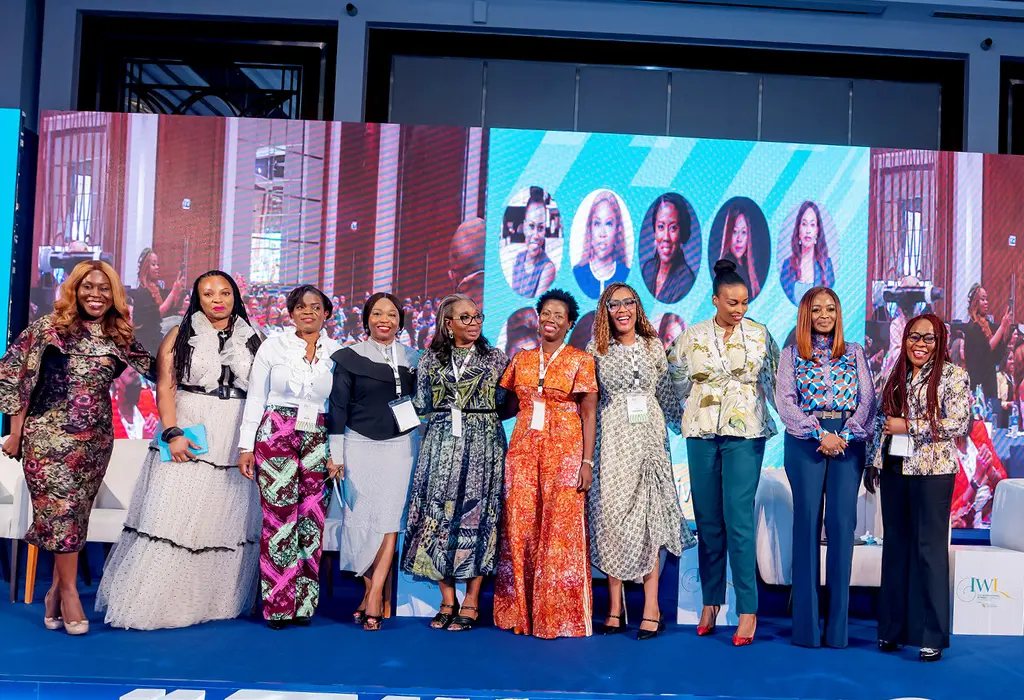
In March 2022, more than 400 C-suite female executives from Africa and the diaspora gathered in Dubai alongside other global leaders for The International Woman Leadership Conference (TIWLC).
At the helm was Ibukun Awosika, an internationally recognized entrepreneur, thought leader, author and speaker whose influence extends far beyond her native Nigeria. She is also an IESE alumna and a member of IESE’s International Advisory Board, renowned for her sharp business acumen, inspirational leadership and a driving conviction: that amplifying women’s voices is key to catalyzing broader economic and social change across Africa and the world.
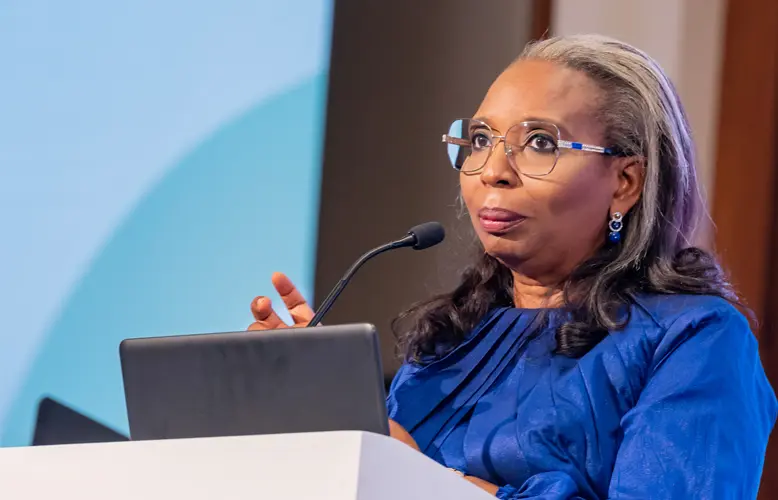
Ibukun Awosika (pictured) is one of the proponents of the “tribes” model to empower and support women in leadership
Organized by her eponymous leadership academy, the TIWLC gathering provided a vibrant platform for learning, connection and personal growth, equipping participants with concrete strategies to identify and overcome obstacles to collective advancement.
Among its highlights: the “Building Tribes” session, where distinguished panelists shared how leaving their professional silos to form small, trust‑based circles — or “tribes,” as they called them — had greatly enriched both their personal lives and professional paths.
Some tribes had been active for years, launched by women who had initially connected through leadership programs, mentoring relationships or community events. Tribes brought together women from diverse professions, roles and sectors with a common mission: to forge enduring, values-based communities where members could advance both individually and collectively.
“The energy on stage was electric,” recalls Maria Puig, director of IESE’s Office of Dignity, Diversity & Belonging and a regular TIWLC attendee since its inception. “While women’s collectives have long driven progress and equality, the ‘tribes’ concept offered something new: a professionally structured space where accomplished women could come together for mutual growth and empowerment. Back at IESE, I shared my takeaways on the ‘tribes’ model with faculty as a promising avenue for further exploration.”
Tribes take off
IESE’s Kandarp Mehta participated as a guest speaker in the 2023 TIWLC, where he connected with members from new tribes that had formed since the first edition. Captivated by their insights and enthusiasm, he decided to delve deeper.
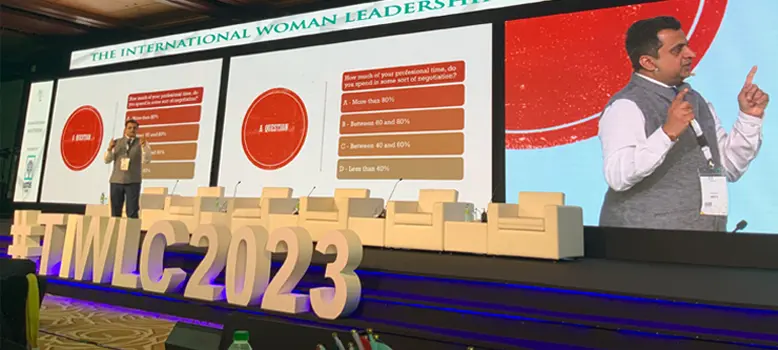
IESE’s Kandarp Mehta (pictured) was guest speaker at TIWLC 2023
“The ‘tribes’ structure fascinated me from both personal and empirical perspectives,” he says. “Research has mostly focused on large-scale networks, professional mentoring and community-based development programs, with limited attention given to smaller, intentional collectives that operate as intimate yet structured support systems.”
To bridge this gap, Mehta conducted interview-based research with female leaders and entrepreneurs from Nigeria, Ghana, the United Kingdom and the broader African diaspora to uncover their motivations for forming tribes and examine how they put mutual support into practice.
The tribe model: 5 core dimensions
1. Breaking the isolation of leadership
Interviewees described the isolation of senior leadership, as well as the quiet fraying of personal relationships when longtime friends could no longer relate to their realities. “When you reach a certain level, some of the friends you grew up with don’t understand what you’re going through,” said one. “They are not having these same conversations.”
Tribes offer a vital counterweight — a space where ambition is celebrated and supported rather than questioned, resented or misunderstood.
2. Promoting lifelong learning
Many tribe members were already successful entrepreneurs and leaders in their fields, yet aspired to broaden their capabilities and scope of influence. “I’m a wonderful surgeon but the business of medicine is different,” said one interviewee. “How do I buy equipment if I don’t make medicine a business that can fund itself?”
While intellectual curiosity was a common motivator, some women joined the tribes with less defined goals. As one Ghanaian entrepreneur explained, “I felt I had more to give but didn’t know where to look.”
In this way, tribes become crucibles for ongoing learning, enabling women to discover new perspectives and insights outside their regular work environments.
3. Cultivating safe spaces
The need for a no-judgment zone to express vulnerability emerged as a common thread in nearly every interview. Wary of competitiveness or mistrust, some women had avoided female professional groups in the past, yet found genuine belonging in their tribe.
“Tribe sisters are like family members,” explained one participant. “We value every aspect about each other, accepting each other’s flaws and appreciating each other’s strengths.”
Within this environment of psychological safety, women feel emboldened to openly share insecurities, personal challenges, family issues and professional doubts.
4. Mobilizing collective purpose
In addition to fostering personal growth, tribes aspire to promote positive change on a broader level. Members organize mentoring programs, scholarships and leadership conferences — tangible initiatives aimed at uplifting the next generation. “If we do nothing else, we want to give back,” said one participant.
Fueled by this deep-seated sense of responsibility, tribes have become formidable drivers of social progress.
5. Nurturing belonging, identity and connection
Echoed throughout the interviews was tribes’ sense of belonging, expressed through rituals, names and collective identity. Naming ceremonies, constitutions and role assignments transformed loose networks into cohesive communities with shared purpose. As one tribe member noted, “We have a constitution and a charter, and we strive to embody that purpose.”
These practices distinguish tribes from casual networks, while reinforcing sisterhood as an enduring identity.
Putting support into practice
In a few short years, numerous tribes of talented female leaders have emerged across Africa and Europe. Though united by similar missions and motivations, each tribe spearheads distinct activities that set them apart from conventional professional associations.
Emotional and spiritual support. Interviewees described emotional affirmation and spiritual encouragement as central to their tribes, where members encouraged one another through personal and professional challenges.
“The support is diverse, from both career and emotional standpoints,” explained one participant. Another valued the opportunity for renewal and reflection: “Our tribe is a safe space where we can vent and recharge our batteries.”
This sense of emotional scaffolding sets tribes apart from more transactional professional networks, underscoring their deeper role in sustaining members’ well-being.
Peer mentoring and skills development. Tribes serve as forums for peer learning, where members coach one another on negotiation, boardroom dynamics, public speaking and career transitions.
One C-suite leader recalled the timely advice she received before her first board meeting, while another described her tribe’s invaluable guidance during her company’s succession process: “When I decided it was time to hand the business over, my tribe sisters sat with me, supported me and helped me think it through.”
Reflecting the belief that “a rising tide lifts all boats,” tribe members transform their individual expertise into a collective asset.
Accountability structures. Unlike informal friendship circles, tribes often create vision boards, organize retreats and establish formal governance systems. “We all have roles: president, vice president, media expert and scribe,” said one.
In this way, tribes provide disciplined and constructive feedback. “If I was doing something really bad online, I know my phone would be ringing off the hook. My tribe sisters would call me out,” shared one interviewee.
The intentional creation of accountability and support systems is central to the tribes’ success, a point that Awosika consistently highlights in her talks. In her keynote address at IESE’s 2025 MBA commencement, she advised, “Life is full of curves, and the curves are not the problem — it’s how you prepare yourself and the kind of support system you build. Be intentional in managing your relationships and in investing in the people who bring net added value to your life.”
Knowledge and resource exchange. The dynamic exchange of cross-industry knowledge is another core component of tribes: surgeons gained business savvy, entrepreneurs learned about governance systems and financiers offered investment advice.
As one woman observed, “Sometimes you learn in the classroom, sometimes you learn by engaging in constructive conversations. That’s how I found growth.” Through this horizontal exchange of knowledge, tribe members enhance and expand their leadership toolkit.
Networking and opportunity creation. Tribes also serve as springboards for networking, greater exposure and new career pathways. “I sit on the board of an important trust thanks to the tribe network,” said one participant. Another underlined the ethos of possibility: “What is your ambition? No matter how big it is, if you’re ready to go on that journey, you’ll have the level of support you need.”
Collective action for social impact. Tribes mobilized as collectives for social projects. Groups organized free women’s conferences and sponsored leadership training and learning opportunities.
“Our conferences are free,” said one participant. “We raised the money ourselves and don’t charge the people we want to impact.” In this way, tribes have a positive ripple effect that reverberates far beyond their individual circles.
Using their power to make the world a better place
Since 2022, TIWLC has grown from a pan-African event into a global movement. In her keynote session at the most recent event in March 2025, Awosika again emphasized the need to integrate and elevate female leadership and harness the power of collective action in breaking down barriers.
“We can’t change the world sitting back,” she stressed. “Women of influence in business, corporate positions and politics need to use their power to make the world a better place. At the end of our lives, we should aspire to say to our sons and daughters, ‘I did my best’ — and mean it.”
MORE INFO: IESE believes that when women succeed, companies and society succeed, too. Under its Women Win initiative, IESE offers tailored programs, dedicated scholarships and a lifelong support network to help women grow as leaders and make a meaningful impact. For more information, contact Maria Puig of IESE’s Office of Dignity, Diversity & Belonging at mapuig@iese.edu.
“Negotiation, women and family business: challenges and strategies” by Kandarp Mehta. Chapter 4 in the book The Power of Inclusion in Family Business edited by Rosa Nelly Trevinyo-Rodriguez and Miguel Angel Gallo (Emerald Publishing, 2022).
This article is included in IESE Business School Insight online magazine No. 171 (Jan.-April 2026).
READ ALSO: